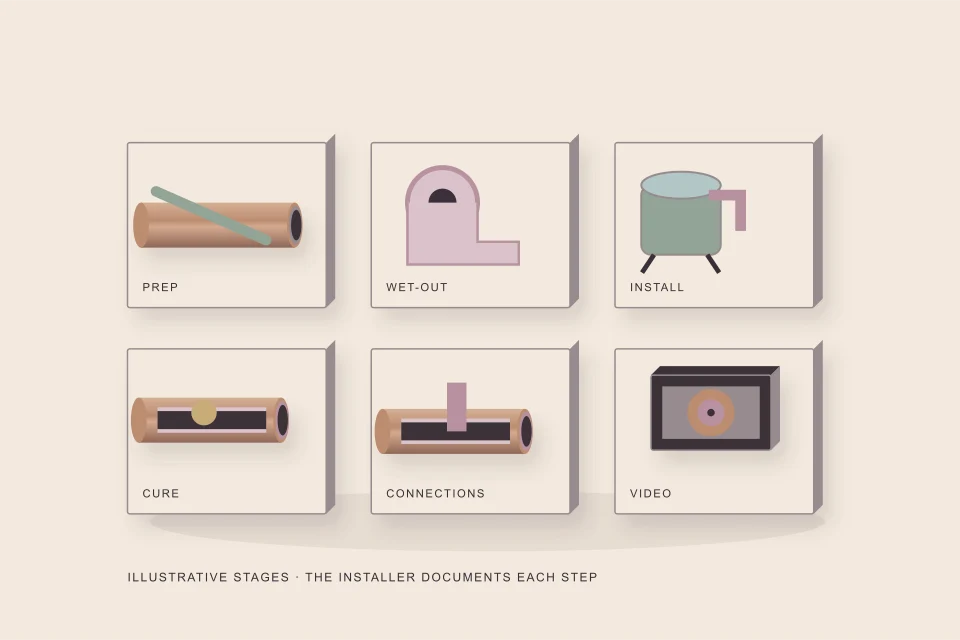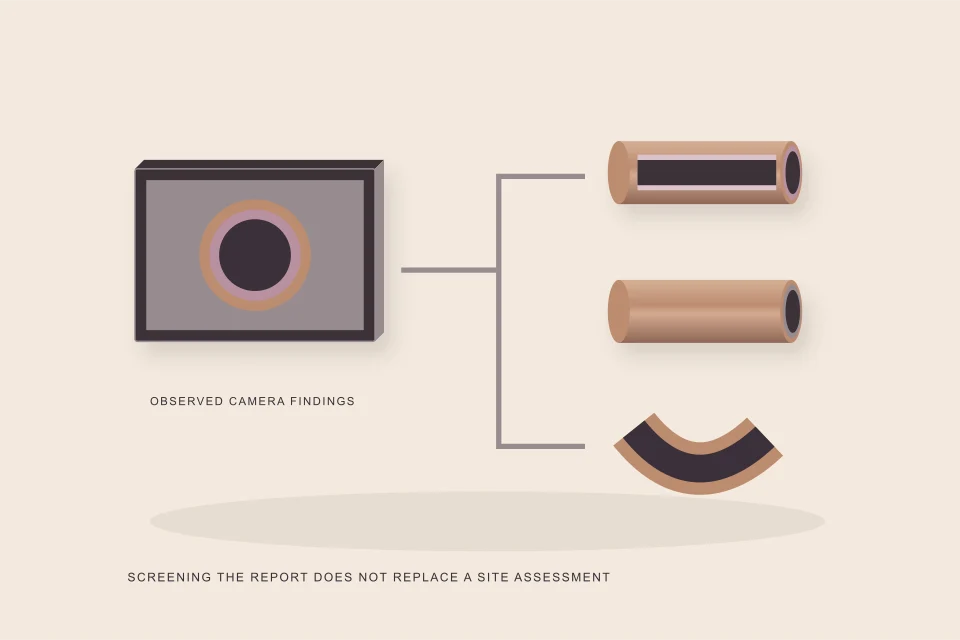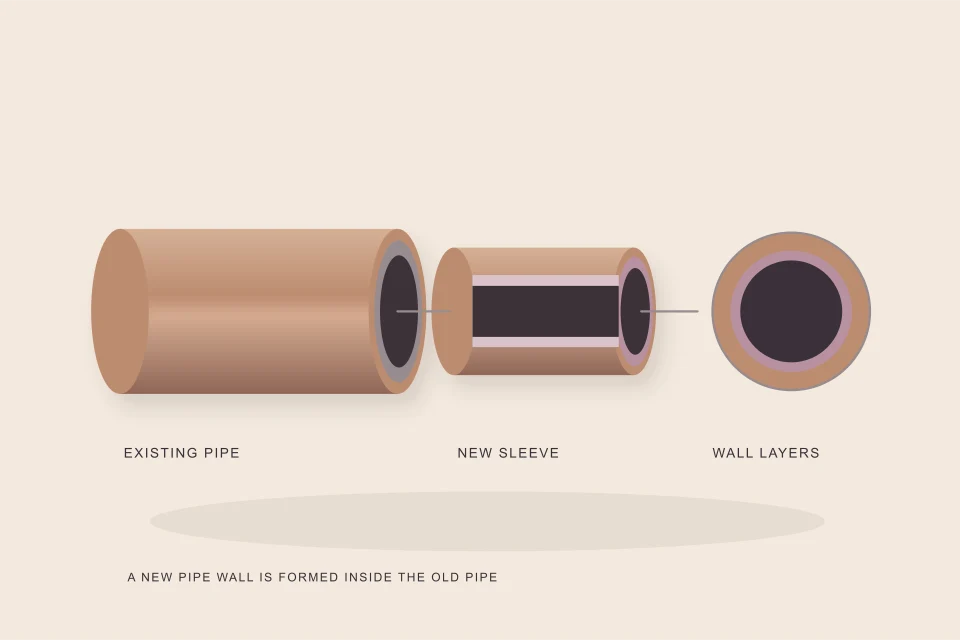
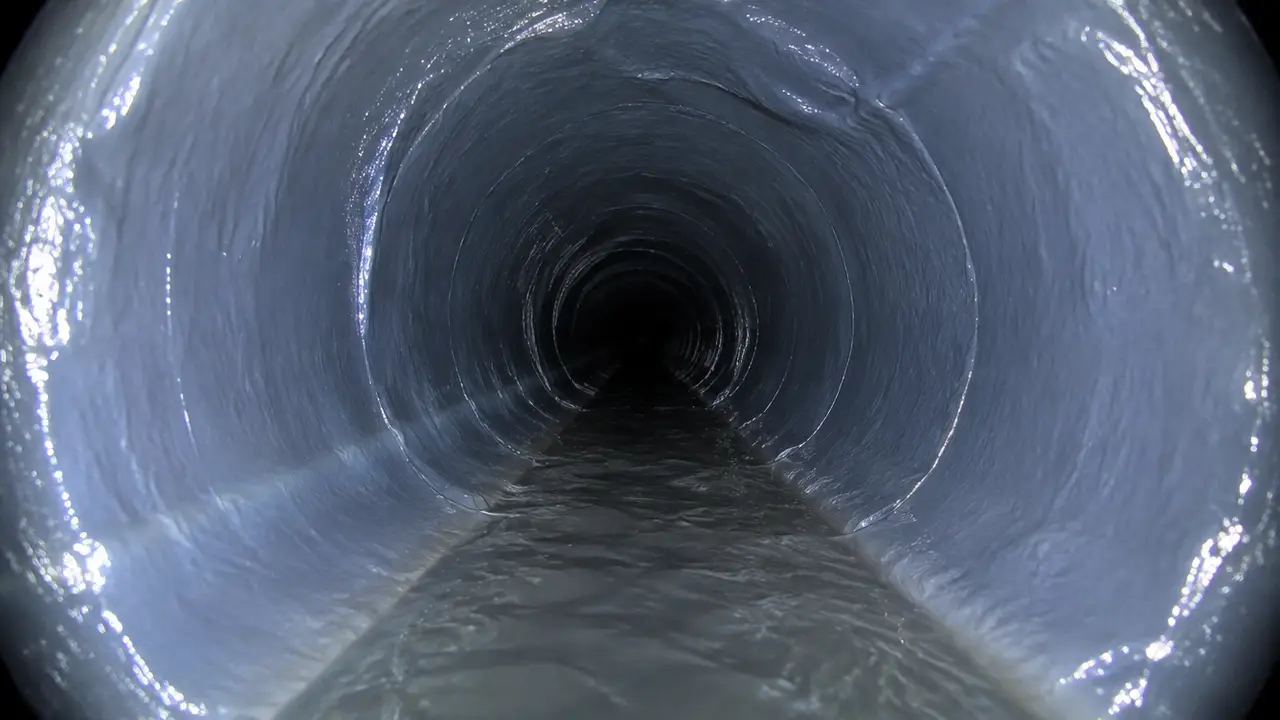
Sewer relining is the renewal of a buried sewer by forming a new pipe inside it. In cured-in-place pipe (CIPP), the usual method, a resin-saturated fabric tube is put into the cleaned old pipe, pressed against its wall and hardened in place by heat, ultraviolet light or time. The cured liner is a continuous, jointless pipe that keeps the old route and grade.
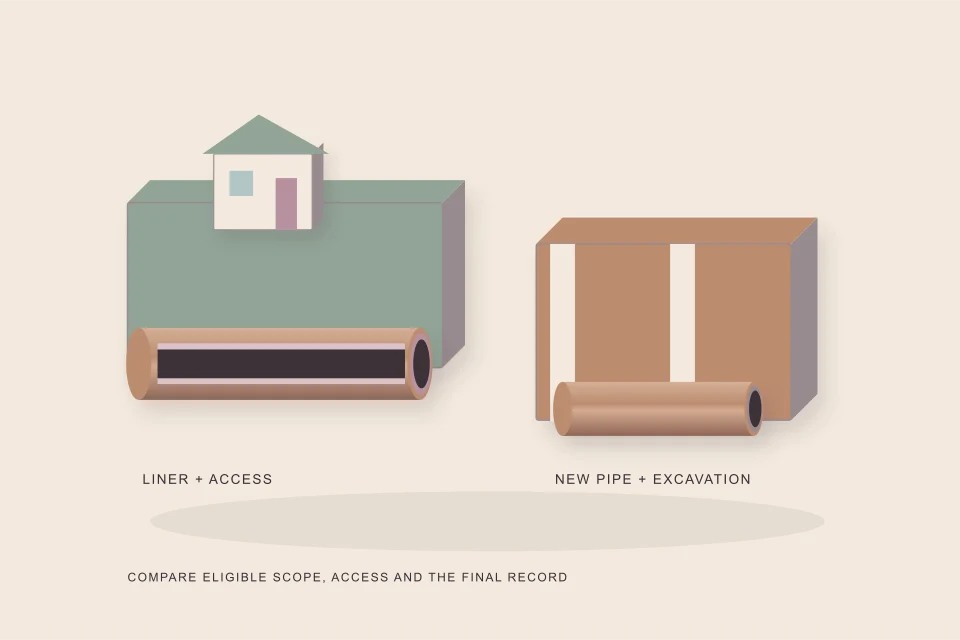
- Relining forms a new pipe inside the old one; nothing is dug along the run, though an access point is needed.
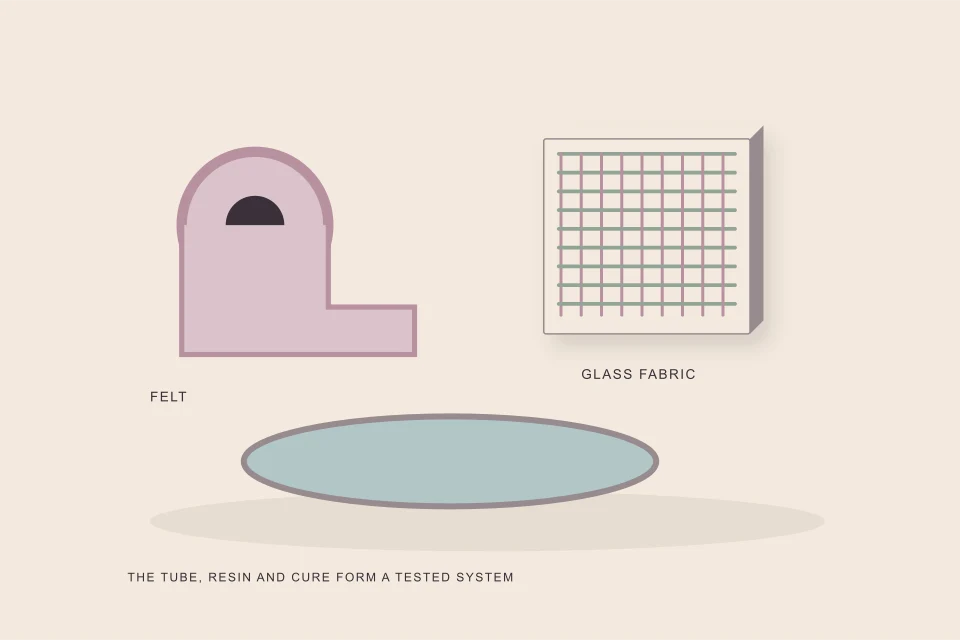
- A CIPP liner is a composite: a felt or glass-fibre tube carrying a thermosetting resin, cured in place.
- The method was first used in 1971 on a Victorian sewer in the London Borough of Hackney, according to NASTT.
- ASTM practices describe the main variants: inversion (F1216), pull-in-place (F1743), UV glass-fibre (F2019), sectional (F2599) and main-to-lateral (F2561).
- A liner seals joints and cracks and can be designed to carry load, but it keeps the old grade and makes the bore slightly smaller.
01 /What does sewer relining mean?
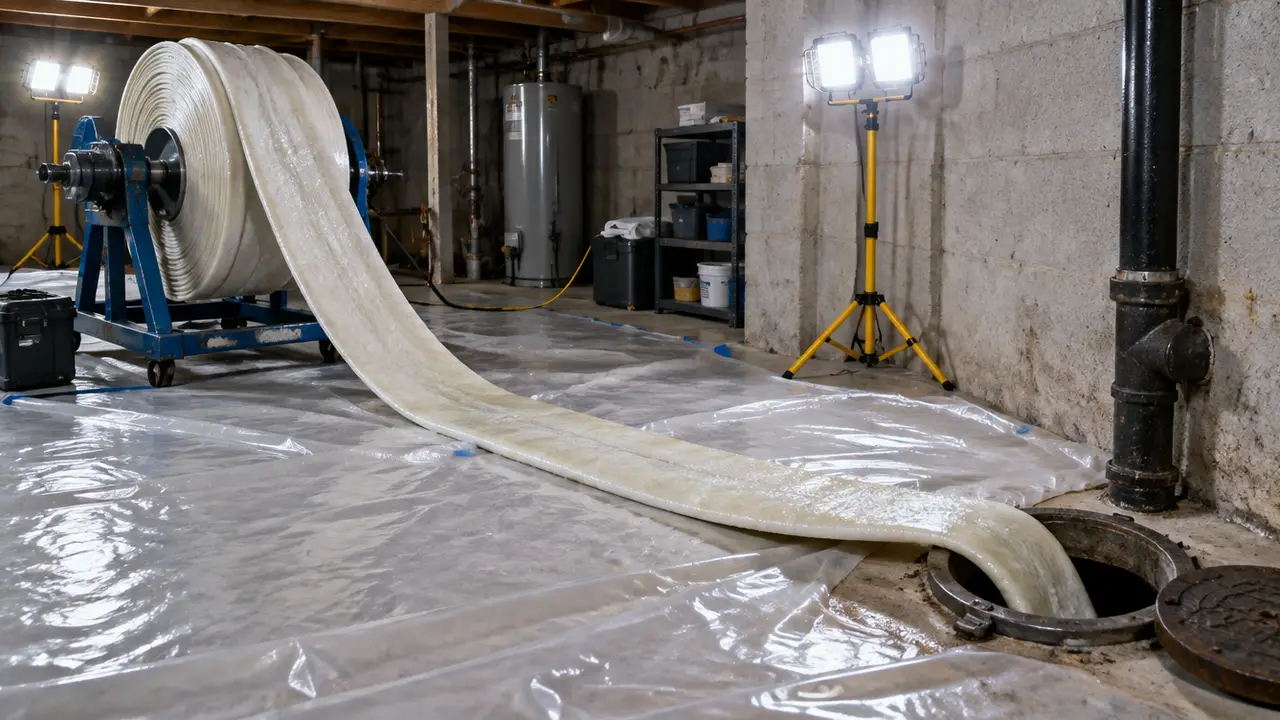
Sewer relining means building a new pipe wall inside an existing sewer instead of digging the old pipe out. In Canada the word almost always refers to cured-in-place pipe, shortened to CIPP, and the two terms are used interchangeably in quotes, municipal notices and contractor advertising. "Pipe relining", "sewer lining" and "trenchless lining" usually mean the same thing. A "sewer liner" is the finished product: the hardened resin tube that now carries the flow.
The old pipe is called the host pipe. It is not removed or broken. It becomes a mould and, depending on its condition, a partner in carrying the soil above. The liner is formed against its inside surface, so the relined sewer follows exactly the same route, slope and bends as before. That single fact explains most of what relining can and cannot do.
02 /What is a cured-in-place pipe made of?
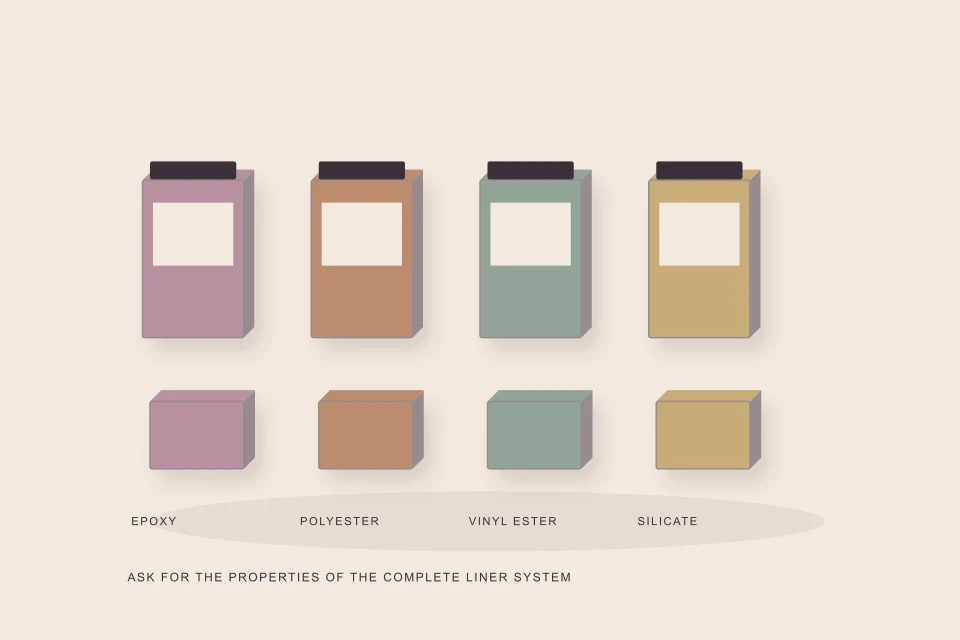
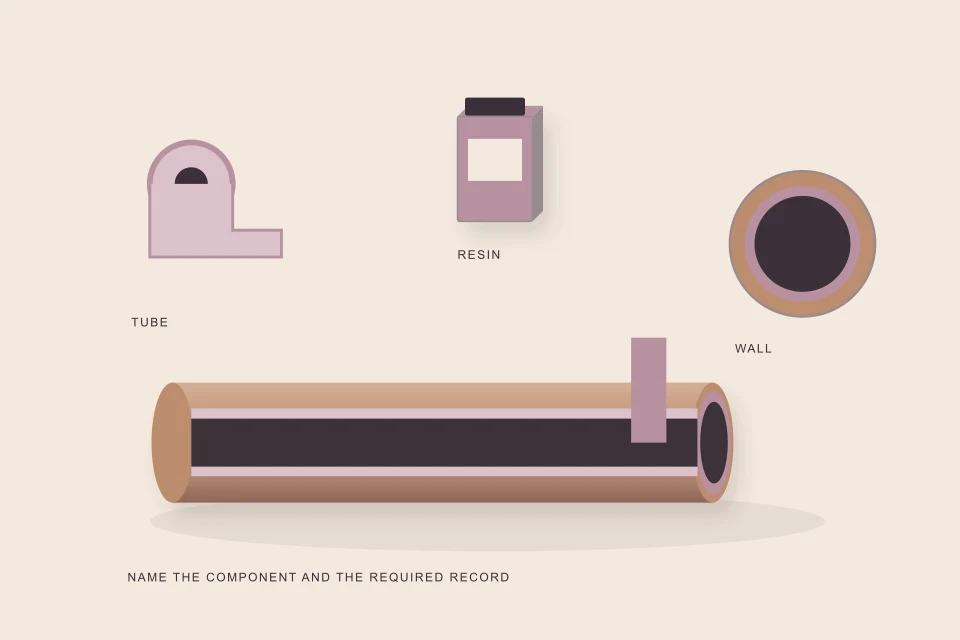
Three things make up a CIPP liner. The first is a flexible tube, the reinforcement. The Iowa SUDAS design manual describes the classic version as an absorbent, flexible, industrial-grade felt tube with an impermeable membrane on one face; glass-fibre fabric tubes are the other main family and are named in the ultraviolet-cure practice, ASTM F2019. The second is a thermosetting resin, a liquid that turns permanently solid when it cures. The US EPA lists unsaturated polyester, vinyl ester and epoxy as the resins commonly manufactured for this work.
The third is the membrane or coating: a thin plastic layer on the tube that holds the resin in during handling and, once the liner is in place, becomes either its smooth inside face or its outer skin, depending on how it was installed. When the resin hardens it locks the fibres together, and tube, resin and coating act as one composite wall. That wall is designed like any other plastic pipe, with a thickness calculated for the loads it must carry.
Each component is a real choice with consequences for odour, strength, cure method and cost. They have their own guides: CIPP liner tubes, CIPP resins and CIPP curing methods.
03 /Who invented cured-in-place pipe?
The method is credited to Eric Wood, an English engineer inducted into the North American Society for Trenchless Technology (NASTT) Hall of Fame in 2013. NASTT records that the first cured-in-place installation was made in 1971 in an egg-shaped Victorian sewer in the London Borough of Hackney, and that it remains in service. Wood went on to form Insituform with Brian Chandler; the process name comes from the Latin in situ, "in place".
That 1971 liner matters to homeowners for one reason: it is a real, decades-long service record rather than a laboratory projection. It does not prove that every liner will last as long, since materials, installers and conditions differ, but it shows that a properly made cured-in-place pipe can outlive the people who installed it. How lifespan claims are built is covered in how long sewer relining lasts.
04 /Which standards describe sewer relining?
ASTM International publishes the practices most North American specifications cite. They differ mainly in how the tube gets into the pipe and how it is cured. Knowing which one a quote refers to tells you a lot about the system being offered.
| Document | What it covers | Stated range |
|---|---|---|
| F1216 | Tube inverted by water head or air pressure; cured by hot water, steam or a photo-initiated reaction | 2 to 108 in |
| F1743 | Tube pulled into place, then inflated by inverting a calibration hose; hot water, steam or photo-initiated cure | 2 to 96 in |
| F2019 | Glass-reinforced tube pulled in, inflated with air and cured by UV light | 4 to 72 in (100 to 1830 mm) |
| F2599 | Sectional repair: a short liner inverted and inflated over a damaged section | 4 to 60 in |
| F2561 | One-piece liner renewing a lateral and its connection to the main | Lateral 3 to 12 in; main 6 to 24 in; lateral up to 150 ft |
| D5813 | Specification for CIPP sewer piping systems, graded by resin and by structural type | 4 to 132 in equivalent |
F1216 also carries the non-mandatory appendix of design equations that municipal specifications use to calculate liner thickness. Those equations, and the two host-pipe conditions they rest on, are explained in liner thickness and ASTM F1216 and can be tried in the Liner Thickness Explorer.
05 /What is sewer relining not?
Several trenchless methods get called "lining", and they are not interchangeable. Knowing the difference stops a quote for one being compared with a quote for another as if they were the same.
- Spray-applied or brush-on coatings: an epoxy or other material applied to the pipe wall as a layer, with no fabric tube. Sometimes called "epoxy lining", which is easily confused with an epoxy-resin CIPP liner.
- Slip lining: a smaller finished pipe pushed or pulled into the old one, usually leaving a gap that is grouted. It loses more diameter than a tight-fitting liner.
- Pipe bursting: the old pipe is broken outward and a new pipe pulled in behind the bursting head. It replaces pipe rather than lining it, and can upsize; see PipeBursting.ca.
- Sectional or point repair: a short cured-in-place liner over one defect. It is CIPP, but it renews a metre or two rather than the whole run.
Every trenchless method, with where each fits, is compared on sister site TrenchlessSewer.ca.
A useful test when reading any quote that says "lining": ask what the finished wall is made of, how thick it is designed to be, and which published practice the installation follows. A cured-in-place liner has answers to all three, a fabric-and-resin wall, a calculated thickness and an ASTM practice number. A coating is described by a film thickness and a product name, and a slip liner by the size and grade of the pipe pushed in. If the answers are vague, the product is probably not the one you think you are buying, and the terms in the relining glossary will help you pin it down.
06 /What does a liner change about a sewer?
A liner changes the inside of the pipe and nothing else. It closes every joint and crack along its length, so roots and groundwater lose their way in, and it gives a smooth, continuous surface. Designed for the right condition, it also carries load the old pipe can no longer be trusted with. The EPA fact sheet lists what it can address: cracks, offset joints and structurally deficient segments.
The EPA also lists its limitations: flow has to be bypassed or diverted during the work, adequate curing time must be allowed, long segments can be harder to cure, and the pipe diameter is reduced. For a house lateral those mean drains out of use for part of a day and a small loss of bore. Whether a particular line qualifies can be screened with Can My Sewer Be Relined?, and the stages of a job are described in how sewer relining works.
If you are weighing a liner against new pipe, is sewer relining worth it sets out the trade-offs, and the sewer relining cost page gives 2026 planning ranges. To have a camera report or lining quote read, send it to the HAUSE Sewer desk.
FAQQuestions people ask
What does CIPP stand for in sewer work?
Cured-in-place pipe: a resin-saturated tube put inside an old pipe and hardened there to form a new pipe.
Is a sewer liner a real pipe or a coating?
A CIPP liner is a pipe in its own right, a fibre-reinforced plastic wall with a designed thickness. A coating is a sprayed or brushed layer with no fabric tube.
When was cured-in-place pipe first used?
In 1971, in a Victorian sewer in the London Borough of Hackney, according to the North American Society for Trenchless Technology.
Does relining remove the old sewer pipe?
No. The old pipe stays in the ground as the host, and the liner is formed inside it.
Is relining the same as pipe bursting?
No. Bursting breaks the old pipe and pulls a new one in behind; relining keeps the old pipe and forms a new wall inside it.
NETWORKGo deeper across the HAUSE Sewer network
How long cast iron drain pipes last, and when to repair, line or replace
How long do cast iron drain pipes last? Why they rust and crack, how to judge remaining life, and when a repair sleeve, lining or replacement is right.
SewerQuotes.comSewer pipe lining cost: what a CIPP liner should cost in Canada
Sewer pipe lining cost in Canada (2026): CIPP liner ranges in CAD for full laterals and single sections, the line items, cost drivers and quality checks.
SewerRoots.caSewer lining for tree roots: will a CIPP liner stop them for good?
Sewer lining for tree roots: how a CIPP liner seals root-damaged joints, which lines qualify, preparation, weak points at the ends, and planning costs.