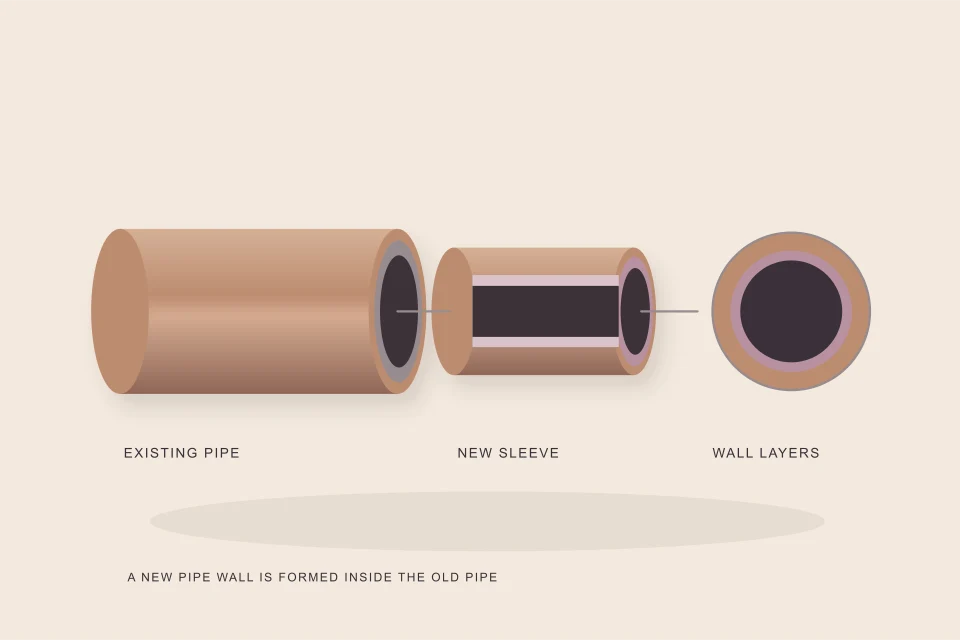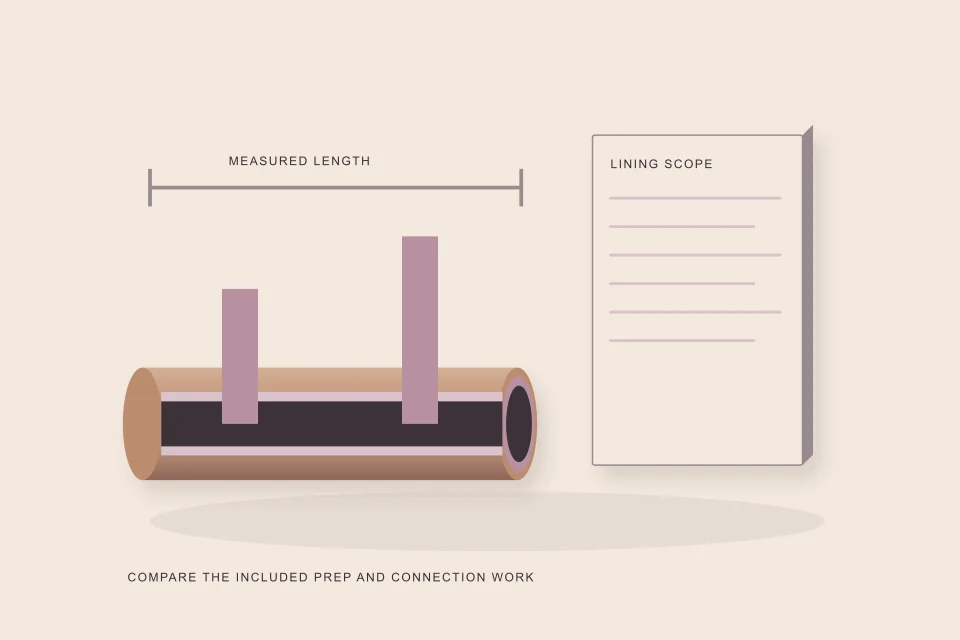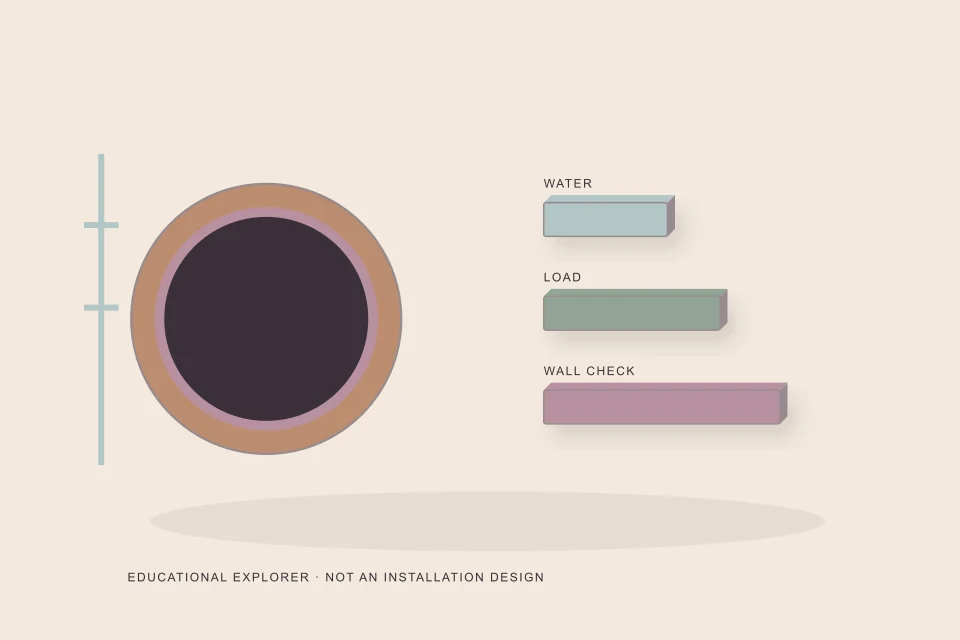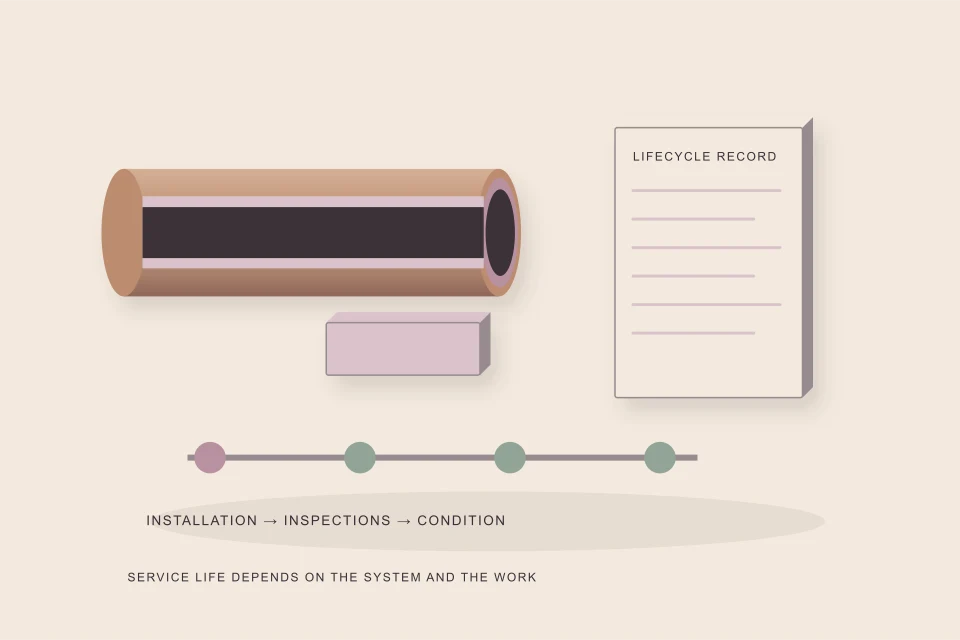
The Iowa SUDAS design manual describes the expected service life of a cured-in-place liner as generally accepted to be 50 years, and the first CIPP liner, installed in London in 1971, is still in service according to NASTT. That life depends on a liner designed for its loads, fully cured, tight to a clean wall, and sealed at its ends and connections.
- Fifty years is a design-life convention, built into how liners are specified and designed, not a promise for any one liner.
- The 1971 Hackney liner is real long-term evidence that the method can last decades.
- Design already allows for creep by using a long-term modulus, normally half the short-term value.
- Defects built in on the day, such as soft resin, wrinkles and unsealed ends, shorten life more than age does.
- A warranty is a contract term, usually far shorter than the design life; read what it covers.
01 /Where does the 50-year figure come from?
It is a design-life convention. The Iowa SUDAS manual states that the expected service life of a cured-in-place liner is generally accepted to be 50 years, and the design method in ASTM F1216 is framed around a design life: the partially deteriorated definition, for example, asks whether the old pipe can support the soil throughout the design life of the rehabilitated pipe. The liner’s long-term properties are chosen so that it still meets its loads at the end of that period.
That makes 50 years a target the design is built to reach, not a measured average for all liners ever installed. It is a reasonable planning number for a liner that was designed, installed and cured properly. It is not a promise that covers a liner with soft spots, a missed connection or water tracking behind an unsealed end.
02 /Is there real evidence that liners last?
Yes, though the history is shorter than for clay or cast iron. The North American Society for Trenchless Technology records that the first cured-in-place pipe was installed in 1971 in an egg-shaped Victorian sewer in the London Borough of Hackney, and that it remains in service. That is more than five decades of use for the very first installation, made with the materials and methods of its time.
Cities that have lined their own sewers for decades are another kind of evidence. The City of Winnipeg says it has used cured-in-place technology to renew sewer pipes for decades, and EPCOR in Edmonton reports that about 80% of its drainage rehabilitation work is done by relining. Utilities that own whole networks keep choosing the method for their own pipes, which is a practical vote of confidence. None of that proves any single house liner will last 50 years, but it places the method among long-life renewals.
03 /How does the design account for ageing?
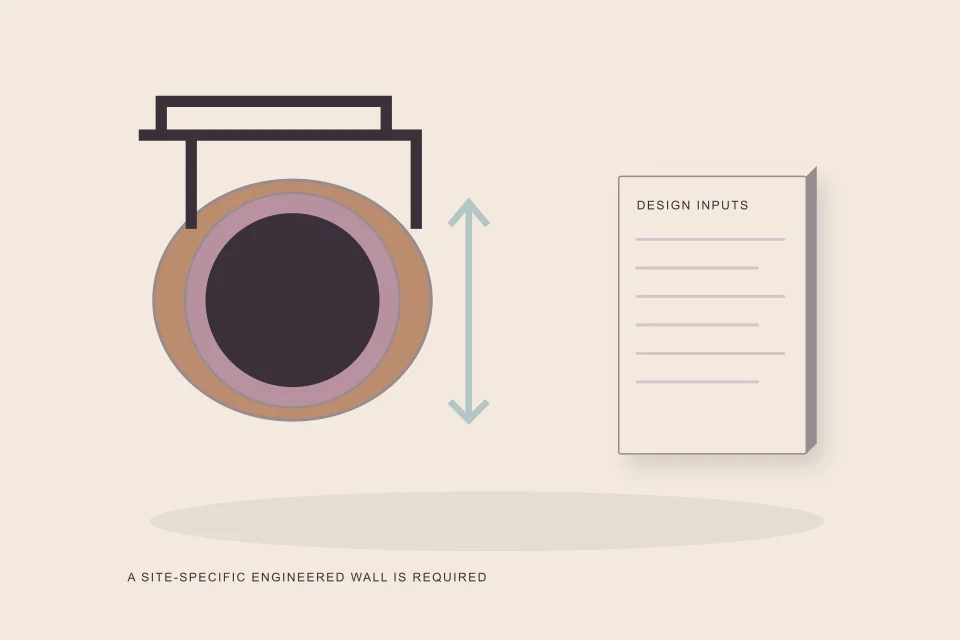
Through creep. A cured resin under constant load, such as groundwater pressure, slowly deforms over time, which is equivalent to it becoming less stiff. SUDAS explains that this long-term creep effectively reduces the liner’s strength, and that a reduction, normally 50%, is applied to the initial flexural modulus to give the long-term modulus used in design. The thickness is calculated with that reduced figure, plus a factor of safety, normally 2.0.
So a correctly designed liner is not expected to be as stiff at year 50 as at year one; it is expected to be stiff enough. That is why the modulus figures behind a design matter. A system with tested long-term properties can justify its numbers; a general claim cannot. The equations are explained in liner thickness and ASTM F1216.
04 /What shortens a liner’s life?
Mostly things that go wrong on the day it is installed, rather than slow ageing. A liner is only as good as its weakest length, and the common weak points are well known.
| Defect | Why it matters over time |
|---|---|
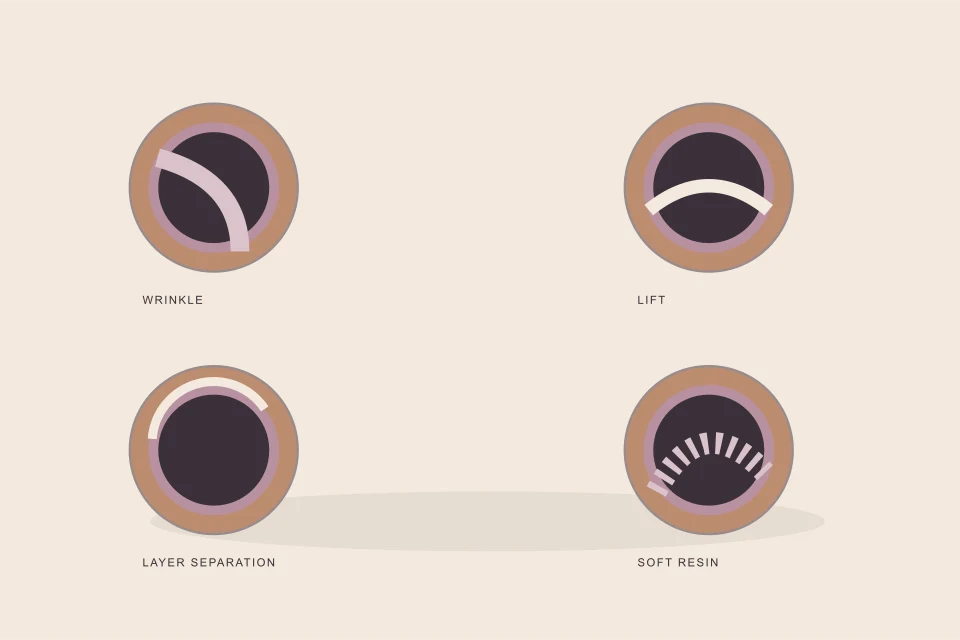
| Under-cured or soft resin | Lower stiffness than designed; can deform or wear |
| Dry spots from poor wet-out | Porous, weak areas in the wall |
| Wrinkles and fins | Catch solids and can crack where the fold is stressed |
| Lifts and an open annulus | Water behind the liner; loss of support; possible collapse inward |
| Unsealed ends and connections | Paths for groundwater and roots into the annulus |
| Under-designed wall | Buckling if groundwater or loads exceed the design |
| Liner cured over debris or roots | Lumps, voids and a wall that never seated |
Every one of these shows on a good final video, which is why that video matters more than any lifespan claim. CIPP liner failures describes each in detail, and cleaning and descaling before lining covers the preparation that prevents several of them.
05 /What about the rest of the sewer?
A liner renews only the length it covers. On a house lateral, the unlined parts are usually the section beyond the liner’s downstream end, often owned by the municipality, the connection to the main, and any branches inside the house. A liner that lasts 50 years does not stop an unlined clay section next to it from failing. When comparing quotes, check where each liner starts and ends, and whether the city side has been or will be renewed.
Grade is also unchanged. A liner in a line with a slight sag still has the sag, and solids can settle there for the liner’s whole life. That does not shorten the liner, but it can mean regular cleaning. Ask the installer which cleaning methods and pressures are acceptable for their liner in future, and keep that note with the final video.
06 /How is a warranty different from a lifespan?
A warranty is a promise about workmanship or materials for a defined period, with defined remedies. A design life is an engineering target. The two are often confused in advertising, where a long design life appears next to a much shorter warranty. Read the warranty for what it actually covers: materials only, or workmanship too; the liner only, or the reinstated connections and ends; repair or replacement; and who stands behind it if the installer closes.
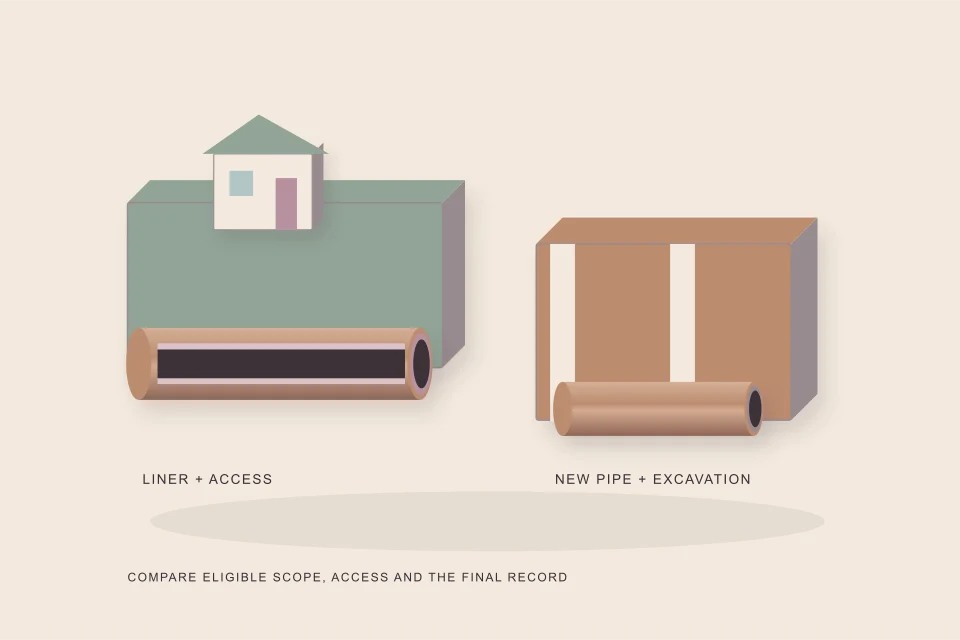
Costs over a liner’s life, and how they compare with new pipe, are set out in is sewer relining worth it. The 2026 planning ranges are on the sewer relining cost page.
07 /Does the host pipe material change how long a liner lasts?
Indirectly. The liner is the same whatever it is cured inside, but the host affects the conditions around it. A clay lateral with many joints lets groundwater reach the outside of the liner along its length, which a partially deteriorated design is meant to resist. Cast iron that was descaled close to its limit may have little strength left, which is why its design condition is a question to settle before lining. Concrete corroded by sewer gas may be missing wall. And bituminous fibre that has lost its shape may not give the liner a round form to cure against.
In each case the answer is the same: the design condition and preparation must match the host, as described in liner thickness and ASTM F1216. A liner designed as partially deteriorated inside a host that is really fully deteriorated is carrying loads it was not designed for, and that, rather than age, is what shortens its life.
08 /How can I help my liner last?
- Confirm the finish on the final video: no soft areas, lifts or wrinkles, every connection cleanly reopened, both ends sealed.
- Keep what goes down the drain in check: grease, wipes and chemical drain cleaners are as unwelcome in a lined pipe as an old one.
- Film it again after a few years, or whenever a symptom appears, and compare with the final video.
- Ask before cleaning: tell any future drain contractor the line is lined and share the installer’s cleaning guidance.
To have a final video or a lining quote read by someone independent, send it to the HAUSE Sewer desk. The Liner Thickness Explorer shows the design side of the question.
FAQQuestions people ask
Does a lined sewer need inspecting later?
It is worth a camera run every few years, or whenever a drain slows, compared against the final video from the lining job. The ends and reopened connections are the places to watch.
Is pipe lining permanent?
Not permanent, but long-lived. Liners are designed for a service life generally taken as 50 years, and the first one, from 1971, is still in use.
How long is a typical sewer liner warranty?
It varies widely by installer and product and is usually far shorter than the design life. Read what it covers and who backs it.
Can a sewer liner be cleaned with a jetter?
Generally yes, with methods and pressures suited to the liner. Ask the installer for their guidance and pass it to any future contractor.
What is the most common reason a liner fails early?
An installation defect, such as an incomplete cure, a wrinkle, a lift or an unsealed end, rather than the liner wearing out.
NETWORKGo deeper across the HAUSE Sewer network
Sewer lining for tree roots: will a CIPP liner stop them for good?
Sewer lining for tree roots: how a CIPP liner seals root-damaged joints, which lines qualify, preparation, weak points at the ends, and planning costs.
SewerQuotes.comIs trenchless sewer repair worth it? Lifespan, cost and when it fails
Is trenchless sewer repair worth it? How long lining and bursting last, when trenchless beats digging on cost, and the pipe conditions where it fails.
DrainAugering.caCan a drain snake damage your pipes? Where the real risks are
Can a drain snake damage pipes? How cables and cutters harm old clay, Orangeburg, cast iron, plastic traps, chrome fittings and toilets, and how to avoid it.