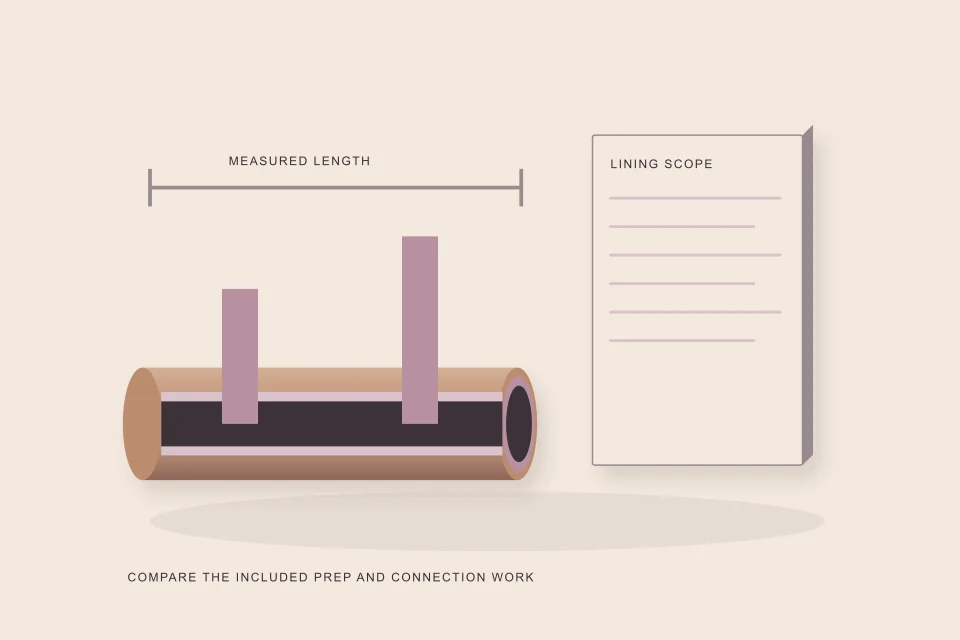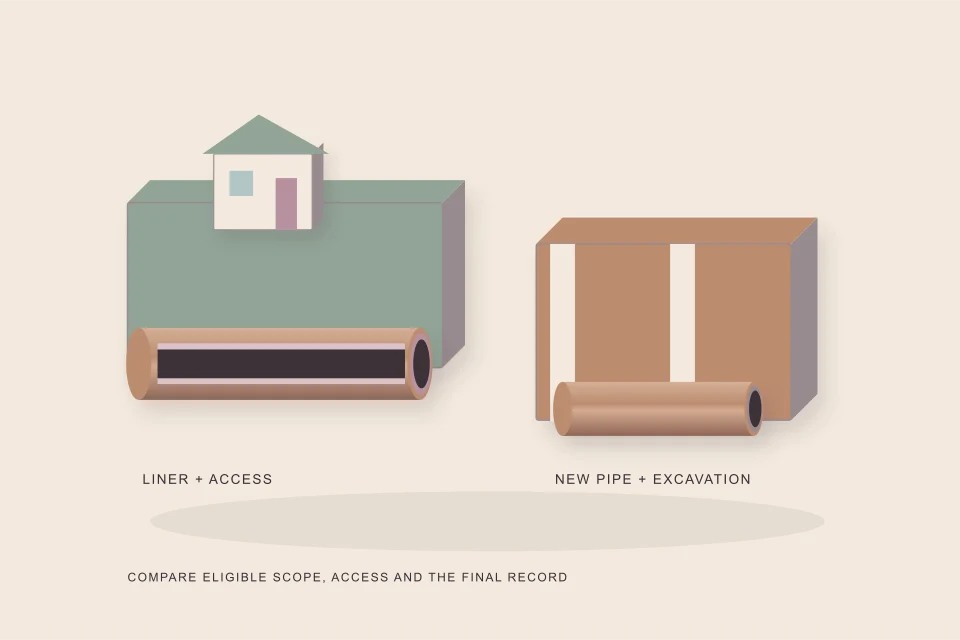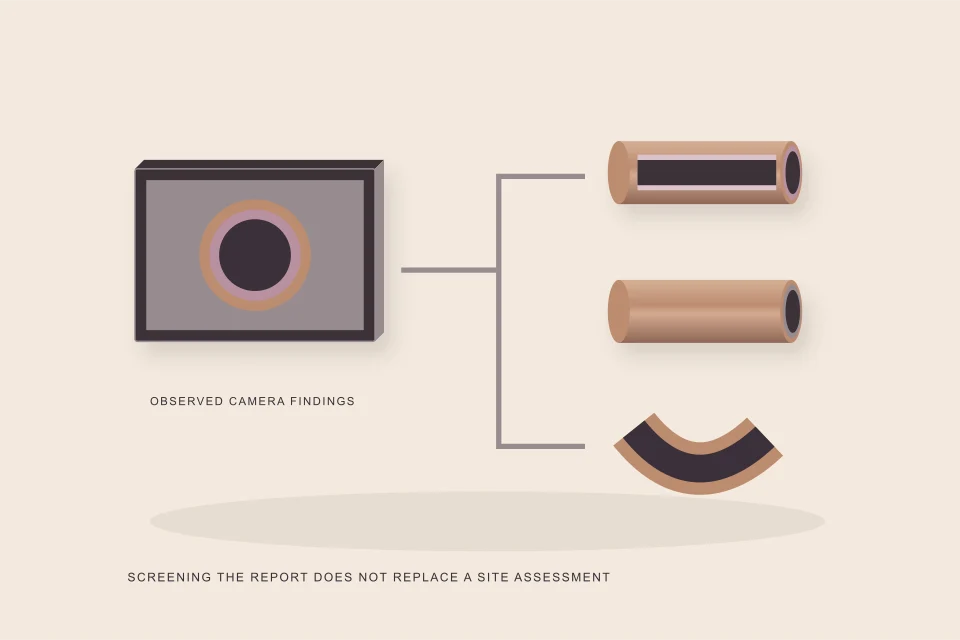
This screen reads your camera findings the way a lining installer does. It stops at anything no liner can pass, such as a collapse, a belly or a blocking offset, sorts the pipe into the partially or fully deteriorated condition used in ASTM F1216, lists the cleaning and descaling the line needs first, and turns bends, size changes and connections into questions for the installer.
- A collapse, a belly holding water or an offset the camera cannot pass stops a liner at that spot, so the result is "not linable as it stands".
- Pipe more than about 10% out of round falls outside the partially deteriorated condition and needs a fully deteriorated design.
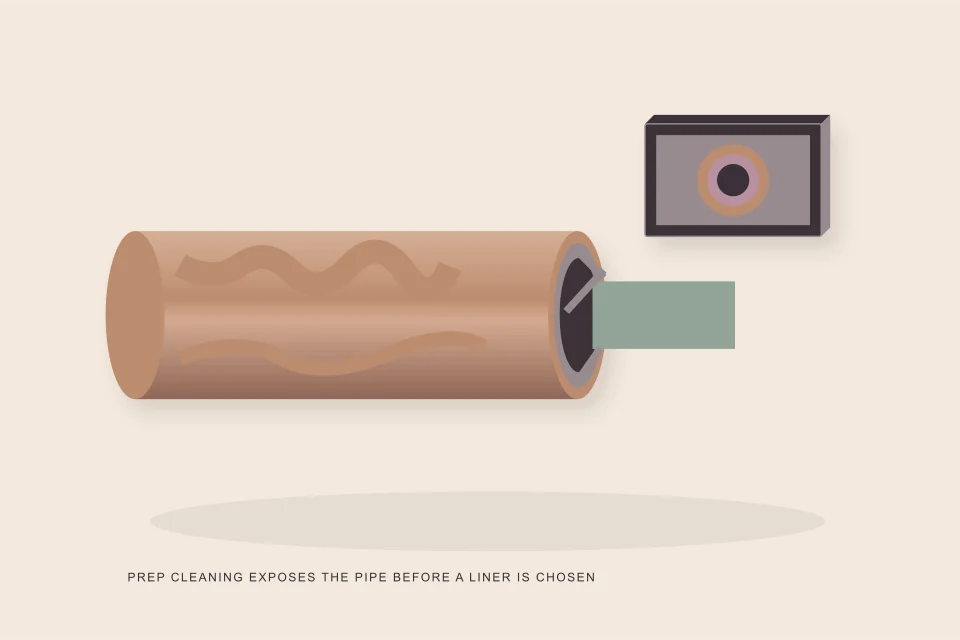
- Roots, scale and cast iron always add preparation: the wall must be clean, and proven clean on video, before the tube goes in.
- Bends, size changes and branch connections do not rule a liner out, but each one decides which tube and method should be used.
Can My Sewer Be Relined?
01 /What does this relining screen tell me?
It tells you whether the facts on your camera report leave room for a cured-in-place liner, and what has to happen before one goes in. A lining installer looks at a sewer video for three things: somewhere the tube cannot physically go, the condition of the host pipe that the liner will be designed around, and the work needed to get the wall clean enough for resin to bond and seat. The screen asks for exactly those facts and reports them in the same order.
It does not price anything and it does not replace a design. The result is one of five verdicts, a likely design condition, a preparation list, a list of liner points to settle, and questions to put to whoever quotes the job. When the answer depends on something only the video can show, the screen says so rather than guessing.
02 /What do I need to answer the questions?
Have the camera report and, ideally, the video file open. Most answers come from the operator’s notes and the footage counter. Where you are not sure, choose the "not sure" option; the screen treats it as a gap to close rather than as a pass.
| Question | Options | What it changes |
|---|---|---|
| 1. Camera inspection | Recent video with distances; old or no file; none | No camera at all means "camera first"; an old record adds a re-scope note |
| 2. Pipe material | Clay, cast iron, concrete, fibre, ABS or PVC, mixed, not sure | Cast iron adds descaling; fibre adds a roundness warning; plastic suggests comparing a spot repair |
| 3. Pipe size | 75, 100 or 150 mm; changes along the run; not sure | A size change flags transition-rated tubes; 75 mm flags tooling |
| 4. Is it still round? | Round; slightly oval; flattened; not sure | Flattened means a fully deteriorated design and a "doubtful" verdict |
| 5. Bends | Straight; one or two 45° bends; a 90° or several; not sure | A 90° or several bends adds a wrinkle-control question |
| 6. Access | Inside cleanout, outside cleanout, both ends, none | No access adds a new cleanout or access pit to the preparation |
| 7. Branch connections | None; one or two; three or more; not sure | Three or more adds a reinstatement question; unknown adds a marking step |
| 8. Under the basement floor? | No; yes; not sure | Yes adds a note that lining can avoid breaking the slab |
| 9. Camera findings | Ten tick boxes, or "none of these" | Blockers, preparation and the design condition |
03 /Which findings stop a liner outright?
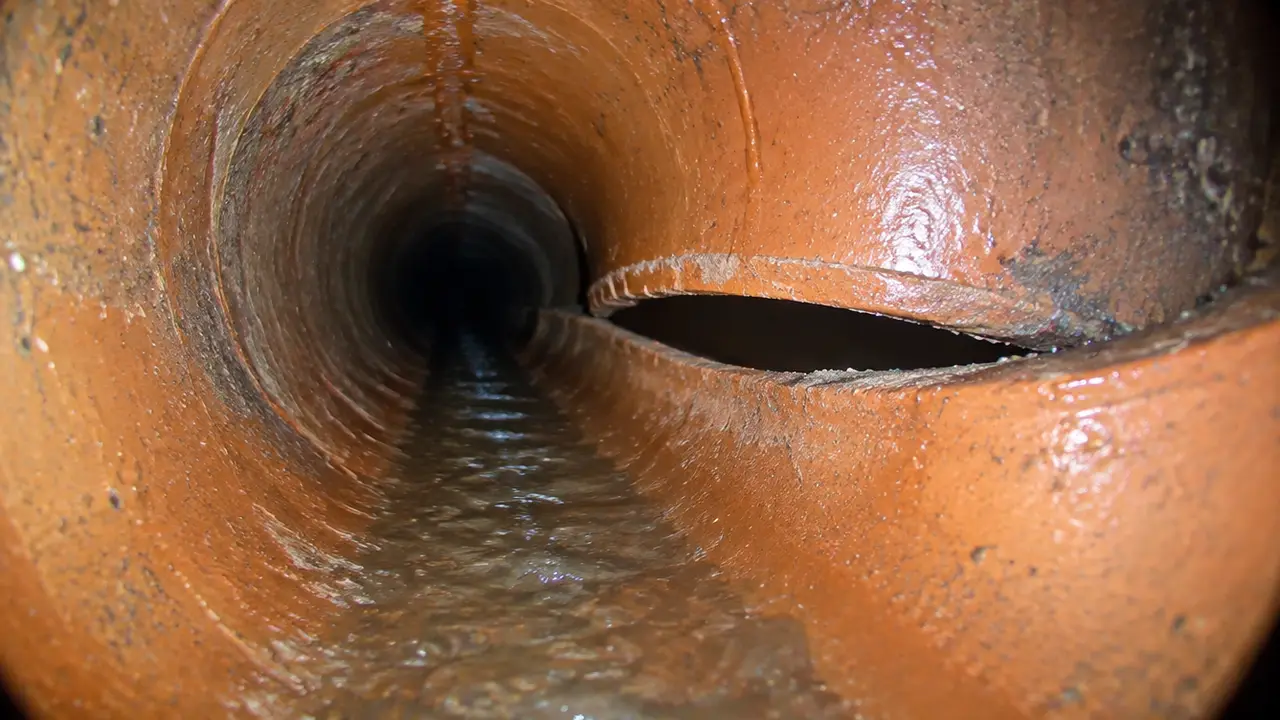
Three findings produce the verdict "not linable as it stands": an offset the camera cannot pass, a belly holding water, and a collapse or missing pieces of wall. They are treated the same way for different reasons. A tube needs an open, round path to invert or pull through, which a blocking offset or a collapse does not offer. A belly is passable, but the liner takes the shape of the pipe it is cured in, so the finished liner holds water in exactly the same dip.
The screen does not say the whole line is lost. It says that one spot is dug and repaired first, and that the rest of the run can then be screened again for a liner. Deciding how to split a line between a dig and a liner is the repair-decision lane of sister site TrenchlessSewerRepair.ca; this site stays with what the liner itself needs.
04 /How does the screen decide the design condition?
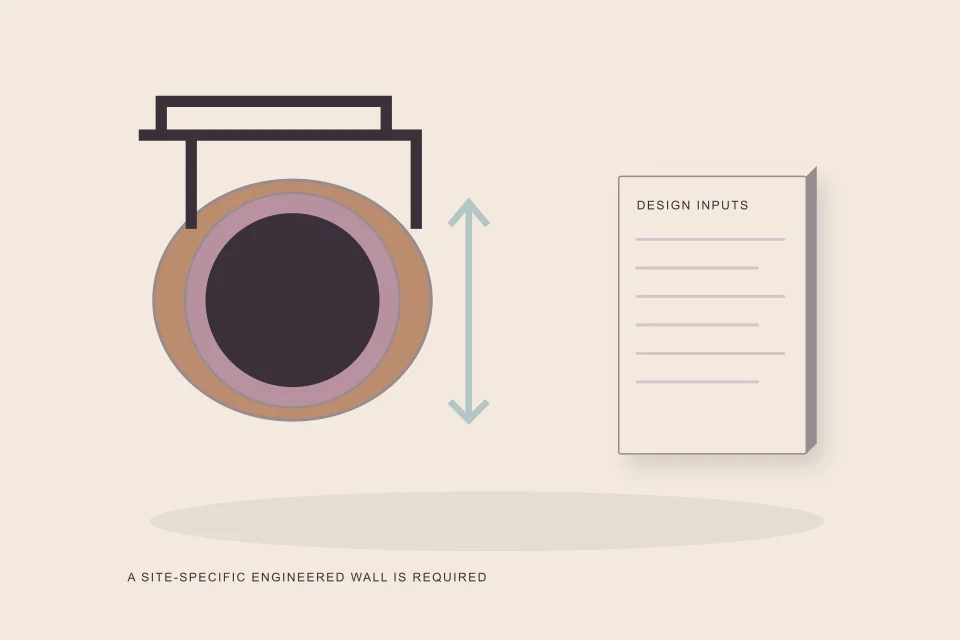
ASTM F1216, the standard practice for inverted cured-in-place liners, designs a liner around one of two host conditions. The Iowa Statewide Urban Design and Specifications (SUDAS) design manual quotes its definitions: a partially deteriorated pipe can still support the soil and surcharge loads for the design life, may have longitudinal cracks, and is distorted by no more than 10% of its diameter; a fully deteriorated pipe cannot, shown by missing sections, lost shape or corrosion.
| Your answers | Condition shown | Why |
|---|---|---|
| Collapse or missing wall ticked | Fully deteriorated | The old pipe cannot be counted on to carry the soil |
| Flattened or badly out of round | Fully deteriorated | Beyond about 10% distortion the partial design does not apply |
| Shape not sure, fibre pipe, or scaled cast iron | Ask which condition the design uses | Wall strength and shape are not yet known |
| Anything else | Partially deteriorated | Cracks, roots and joints in round pipe leave the soil on the host |
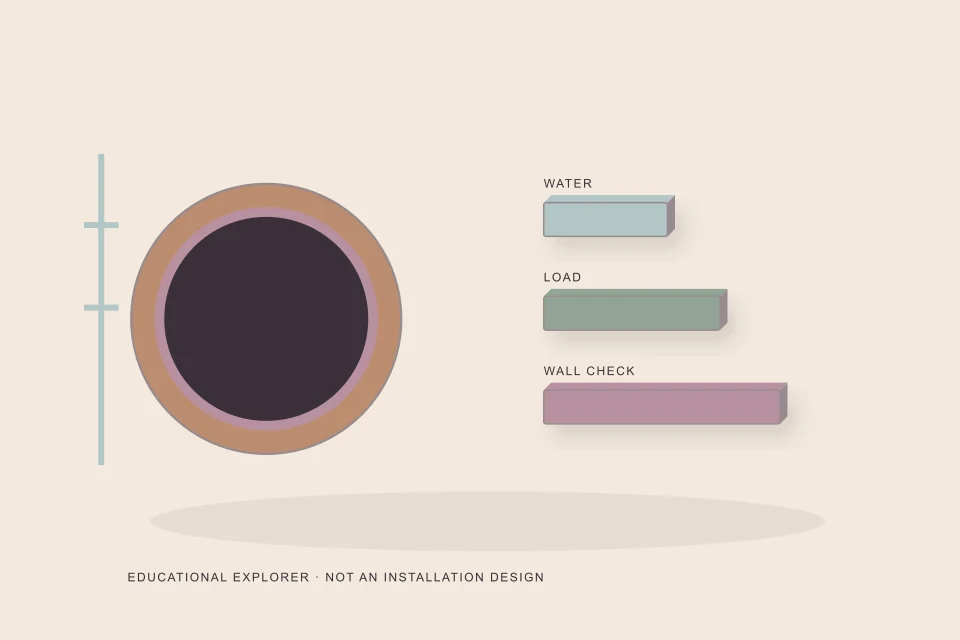
The condition matters because it changes the load the liner is designed to carry, and so its thickness. A partially deteriorated design resists groundwater pressure; a fully deteriorated design carries water, soil and any traffic load as if the old pipe were not there. The Liner Thickness Explorer runs both sets of published equations so you can see the difference for your depth and pipe size, and the reasoning is set out in liner thickness and ASTM F1216.
05 /What preparation does each answer add?
Preparation is where a lining job is won or lost, so the screen lists it separately from the verdict. Each line below appears only when your answers call for it.
- Roots ticked: cut them out completely, then a camera pass to prove the wall is clean.
- Cast iron, or heavy scale ticked: descale back to sound metal, then a camera pass to confirm enough wall is left to line.
- Cracks, open joints or passable offsets ticked: jet the line so the tube seats tight at every one.
- Fibre pipe: clean gently; only round, passable sections can be lined.
- No access point: create one first, a new cleanout or a small access pit.
Any preparation item, a fibre pipe, an uncertain shape, or more than one liner point moves the verdict from "good lining candidate" to "candidate after preparation". That is not a warning sign; most old clay and cast iron laterals land there. The methods themselves are described in cleaning and descaling before lining.
06 /What are the liner points to settle?
Some answers do not change whether a liner can go in, but they do change which tube, resin and installation method suit the line. The screen turns them into points to settle with the installer.
| Answer | Point raised |
|---|---|
| Size changes, or material changes along the run | A tube and method rated for the transition, or two separate liners |
| A 90° bend or several bends | Whether the tube and method are rated for the bends, and how wrinkles are controlled |
| Bends not sure | Count them on the video before choosing a system |
| Groundwater running in | Design for the water pressure outside, and keep running water from washing out resin before the cure |
| Three or more connections | How each is located, cut and sealed after the cure |
| Connections not sure | Mark every branch by distance on the pre-lining video |
| Under the basement floor | Lining can avoid breaking the slab if that section qualifies |
| 75 mm pipe | Confirm tubes and cutters for that size |
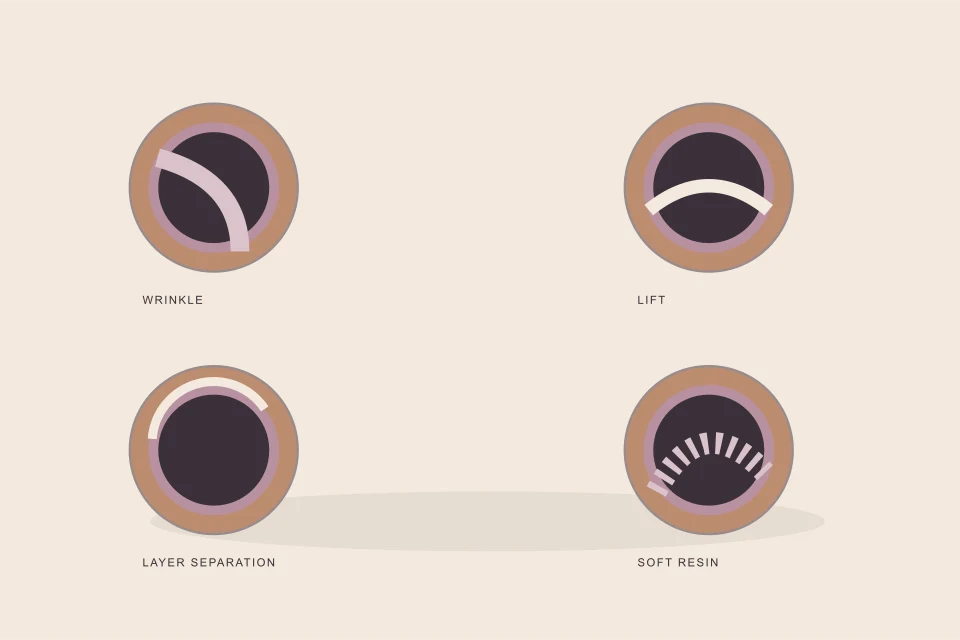
Why bends and transitions matter is explained in CIPP liner failures, where wrinkles and fins are the most common defect at exactly those places. Branch connections have their own guide, reinstating connections after lining.
07 /How is the verdict chosen?
The verdict follows a fixed order, and the first rule that applies wins.
- Camera inspection first when there is no camera inspection.
- Not linable as it stands when any blocker is ticked.
- Doubtful: needs a fully deteriorated design when the pipe is flattened or badly out of round.
- Nothing here calls for a liner when only "none of these" is ticked.
- Candidate after preparation when any preparation item applies, the pipe is fibre, the shape is not sure, or more than one liner point is raised.
- Good lining candidate otherwise.
Alongside the verdict, the matrix shows the design condition, whether preparation is routine or needed, and an overall go, prepare or stop. Notes explain blockers, an old or missing camera record, unknown material or size, and the case of plastic pipe, where a short sectional liner or a spot repair is often worth comparing before lining a whole run.
08 /What should I do with the result?
Take the "ask the installer" list to every contractor who quotes, and compare their answers as carefully as their prices. The questions cover the tube, resin and cure, the design condition and calculated thickness, the video you will receive after cleaning and after reinstatement, how connections are reopened and sealed, and whose warranty covers the work.
Two quotes that use different design conditions, different resins or different cure methods are not the same product, even at the same length. The trade-offs between those choices are laid out in CIPP resins and CIPP curing methods. What a lining job should cost is on the sewer relining cost page.
If the screen stopped at a blocker, or you want someone to read the footage with you, send your camera report and video to the HAUSE Sewer desk. HAUSE is an independent information and quote-request network, not a contractor, and it does not install liners.
FAQQuestions people ask
Can a sewer with roots in it be relined?
Yes, once the roots are cut out completely and a camera pass shows a clean wall. Roots left in place end up cured inside the liner as lumps.
Can a flattened sewer pipe be relined?
Rarely as it stands. More than about 10% out of round falls outside the partially deteriorated condition, so the liner needs a fully deteriorated design, and some flattened pipe must be dug instead.
Does a liner fix a belly in a sewer line?
No. The liner cures in the shape of the host pipe, so the dip stays and keeps holding water. The belly is dug and relaid first.
Is a lining screen the same as an inspection?
No. It organises what an inspection found. Without a recorded camera run, the screen returns "camera inspection first".
Why does the screen ask about bends and pipe size changes?
Wrinkles form most readily at bends and transitions, so they decide which tube and installation method will seat cleanly.
NETWORKGo deeper across the HAUSE Sewer network
Sewer lining for tree roots: will a CIPP liner stop them for good?
Sewer lining for tree roots: how a CIPP liner seals root-damaged joints, which lines qualify, preparation, weak points at the ends, and planning costs.
SewerJetting.caJet or auger? A decision tool for your blocked line
Jet or auger decision tool: enter blockage type, pipe material, camera findings, pipe size and access to see whether to jet, auger or camera first.
SewerQuotes.comIs trenchless sewer repair worth it? Lifespan, cost and when it fails
Is trenchless sewer repair worth it? How long lining and bursting last, when trenchless beats digging on cost, and the pipe conditions where it fails.