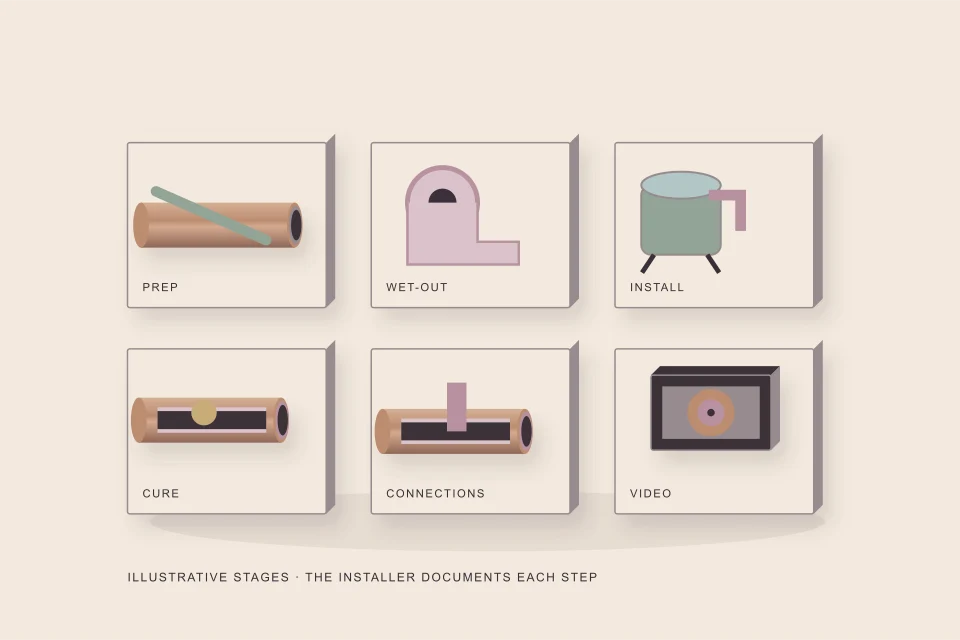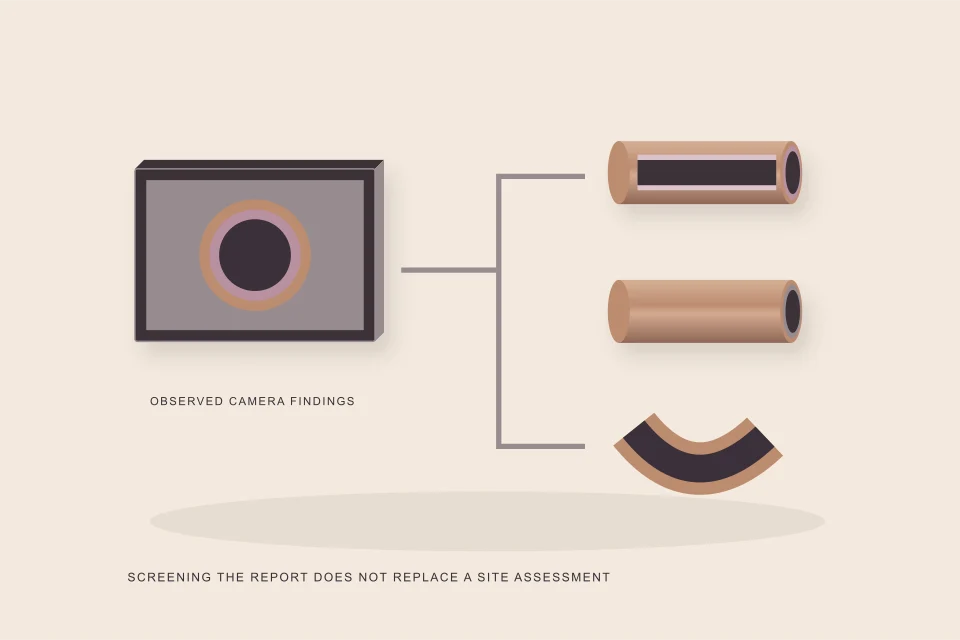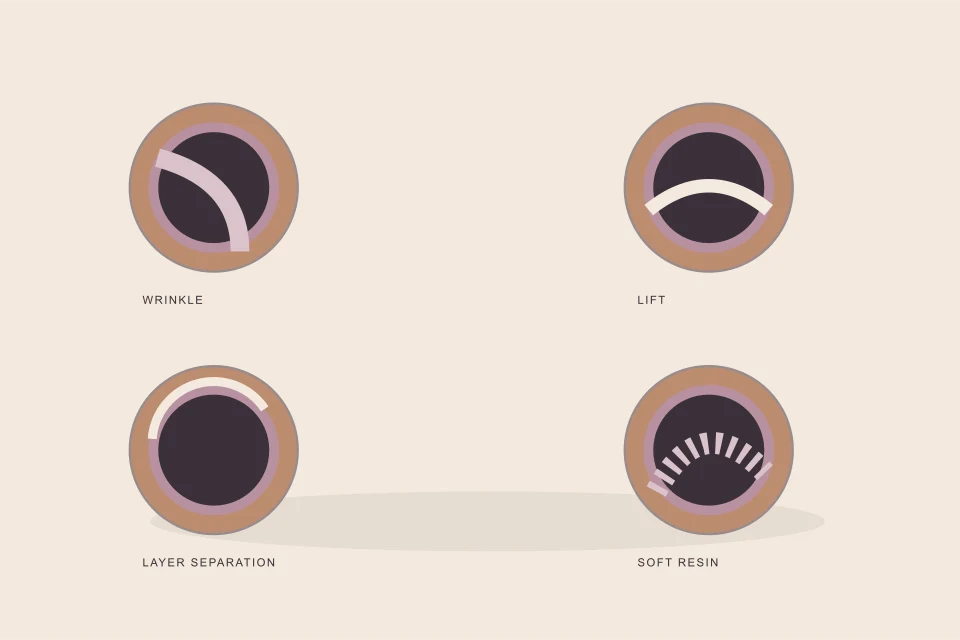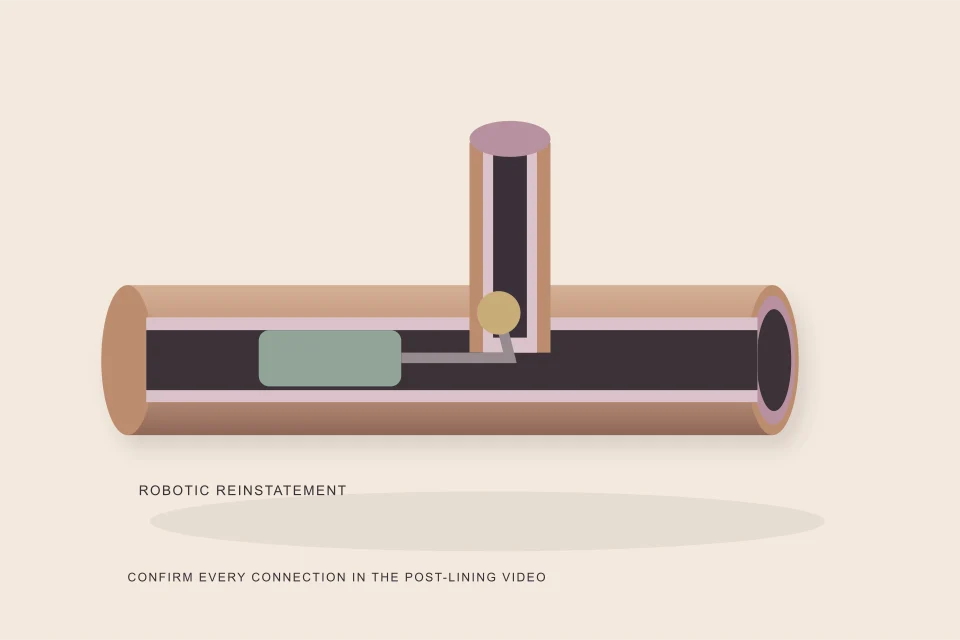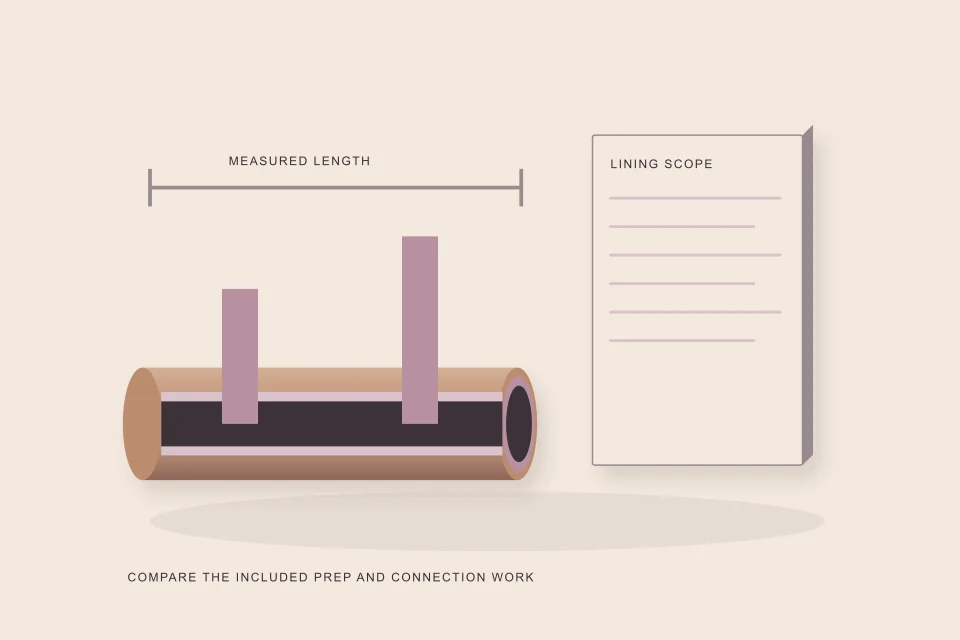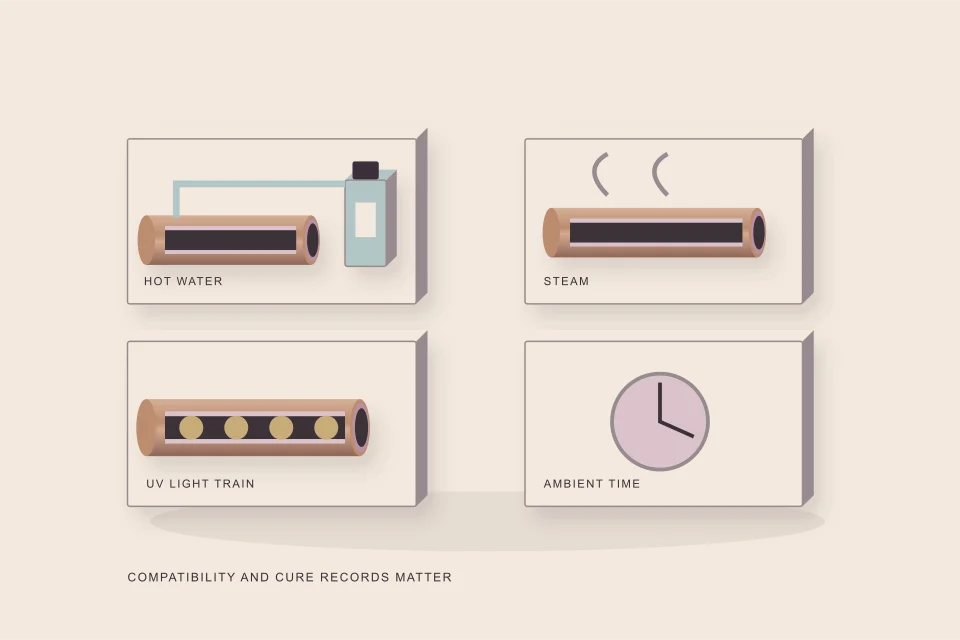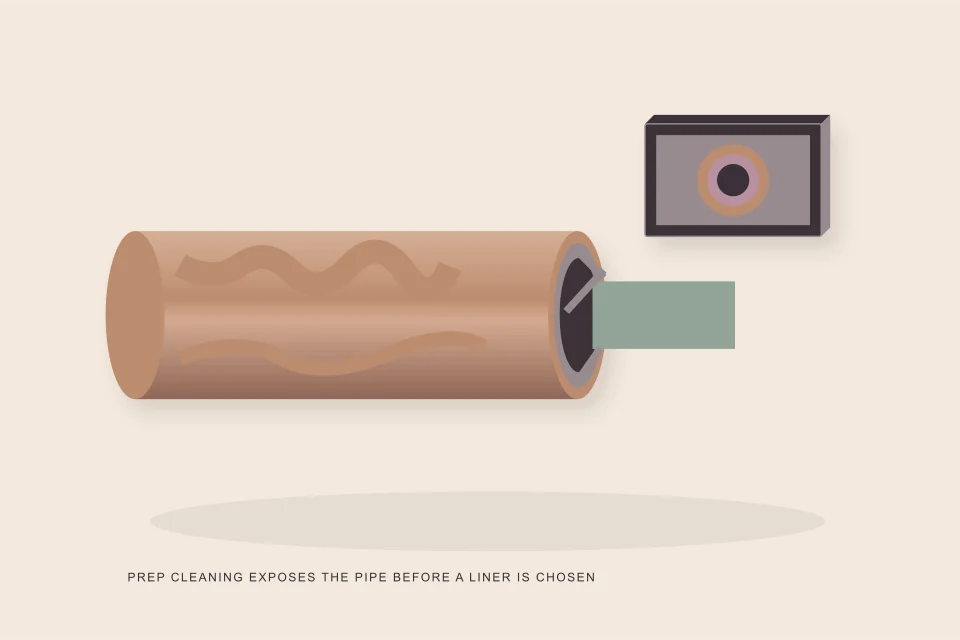
Before a liner goes in, the host pipe is cleaned back to a sound wall so the tube can seat tight along its whole length. That means jetting out grease and sediment, cutting roots out at the joints, descaling cast iron back to metal, grinding protruding pieces flush, and filming the pipe again. The Iowa SUDAS manual says obstructions a liner cannot pass are removed first, remotely or by a point dig.
- A liner copies the surface it is cured against, so anything left on the wall ends up in the finished pipe.
- Roots must come out completely; cured-over roots leave lumps and a path back in.
- Cast iron is descaled to sound metal, and the post-cleaning video must show enough wall to line.
- Protruding taps, severe offsets and collapses are dealt with before lining, by remote repair or a point dig.
- Flow must be stopped or bypassed; on a house lateral that means no water use during the work.
01 /Why does a sewer need cleaning before lining?
Because the liner copies whatever it is pressed against. Inverted or inflated under pressure, a resin tube conforms to the host wall, and when it cures that shape is fixed. Grease, scale, root mass or grit left on the wall become lumps in the liner, gaps behind it, or weak spots where the tube could not seat. The Iowa SUDAS manual puts it at the start of its CIPP section: the sewer should be thoroughly cleaned and televised before lining, all service connections identified and noted, and large debris removed.
Cleaning also reveals the pipe. Debris hides cracks, holes and broken sections that change the design or rule a liner out at that spot. For that reason the post-cleaning video is as important as the first one; it is the record of the surface the liner is actually being cured against.
02 /Which cleaning methods are used before lining?
| Method | Removes | Watch for |
|---|---|---|
| High-pressure jetting | Grease, sediment, loose scale, fine roots | Pressure suited to old or fragile pipe |
| Mechanical root cutting | Root masses at joints | Every joint cut clean, not just opened |
| Chain or cutter descaling | Tuberculation and hard scale in cast iron | Remaining wall thickness; holes opened by cleaning |
| Grinding or robotic cutting | Protruding taps and lips, hardened deposits | Branch pipes damaged while trimming |
| Vacuum or flushing | Loosened debris carried out of the line | Nothing left sitting in the invert |
Most jobs use more than one. A clay lateral with roots at every joint might be cut, jetted and filmed; a cast iron building drain might be descaled in several passes with a chain flail or cutting head, flushed and filmed after each. The general cleaning methods are compared on sister site PipeCleaning.ca; this guide is about the extra standard a liner demands.
03 /How are roots removed before a liner?
Completely, at every joint the liner will cover. A root that is only opened up, leaving a ring of root hair around the joint, is cured into the liner as a lump. It also leaves a path along the outside of the liner where roots can follow water. Roots are usually cut with a rotating cutter or a jetter nozzle designed for roots, then the line is flushed and filmed.
Heavy root masses may need several passes, and the operator should film each joint closely enough to see the wall. If roots have grown through a crack or pushed a joint apart, the camera may show a defect that changes the plan. The lining itself is what stops roots coming back along the lined length, since there are no joints left for them to enter. The ends of the liner and the reopened connections are the remaining openings, which is why their finish matters.
04 /How is cast iron descaled for lining?
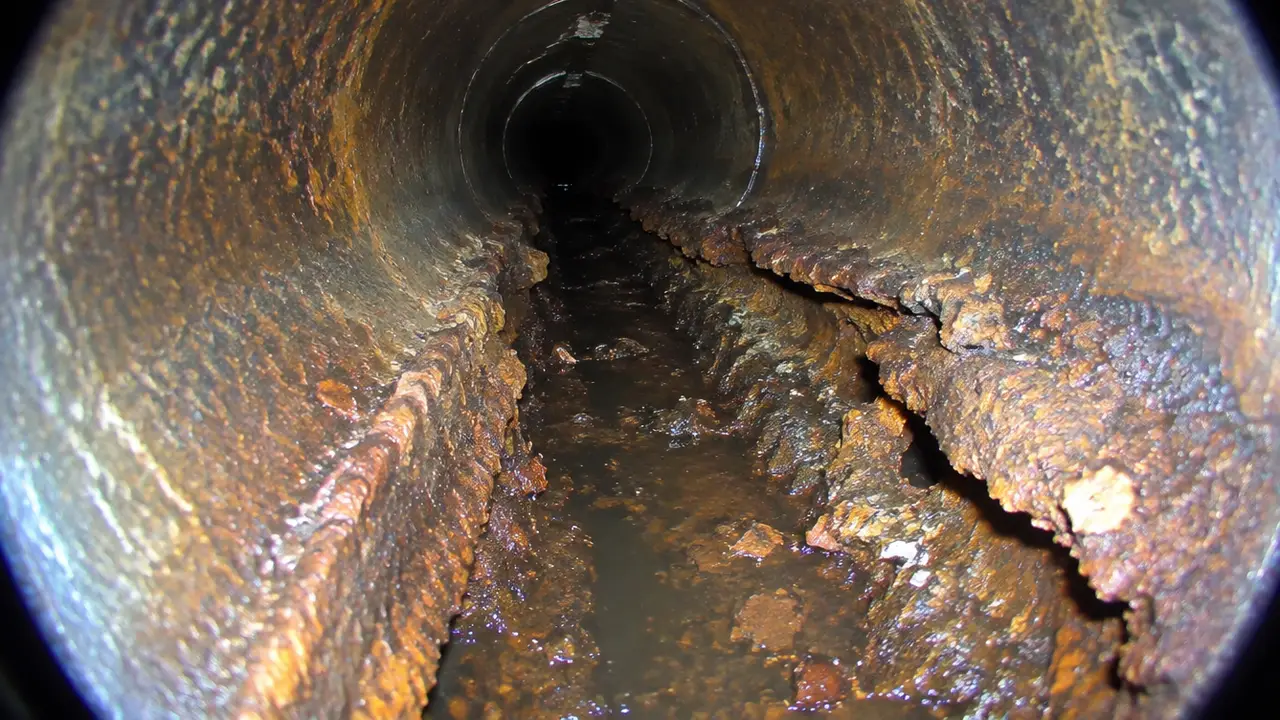
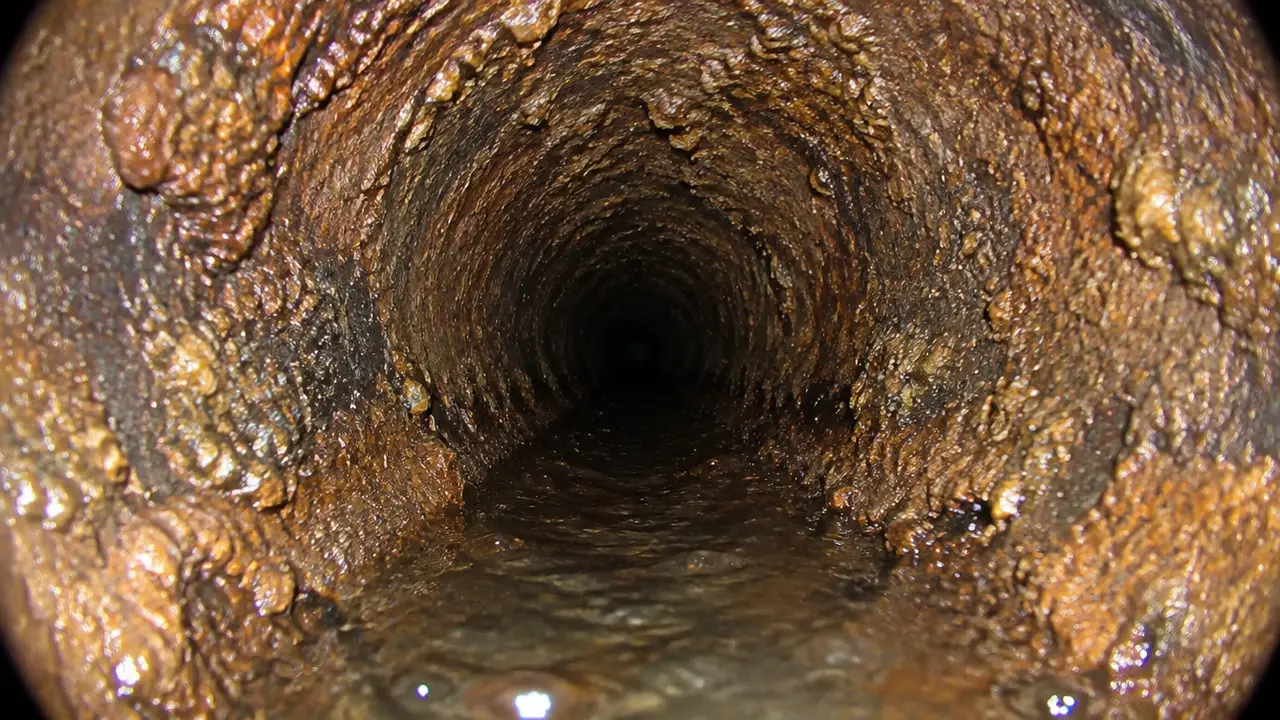
Cast iron corrodes from the inside, growing rusty nodules called tuberculation and layers of scale that narrow the bore. A liner cured over them would copy every nodule and leave voids between them. Descaling uses spinning chains or cutting heads driven through the pipe to break the scale off and bring the wall back to sound metal, followed by flushing to carry the debris out.
The risk is that cleaning finds less pipe than expected. Where corrosion has eaten through the wall, descaling can open a hole or remove a section that was held together by scale. That is why the post-cleaning video must be reviewed before lining, and why the design condition for old cast iron is a question rather than an assumption. Where much of the wall is gone, the liner is designed as fully deteriorated, or that section is repaired first. The Can My Sewer Be Relined? screen treats scaled cast iron exactly that way.
05 /What has to be fixed before lining?
Some things cannot be cleaned away. SUDAS lists obstructions that may interfere with lining, protruding services, severely offset joints, collapsed pipes and tree root penetration, and says they should be addressed by either remote repair or an open-cut point repair before the liner goes in.
- Protruding taps: branch pipes poking into the bore are ground flush remotely.
- Severe offsets: where the camera cannot pass, the joint is usually exposed and realigned.
- Collapses and missing pipe: there is no round path; the section is dug and replaced.
- Bellies: passable, but a liner keeps the dip; they are dug and relaid on grade before lining.
Planning a line that needs one dig and a liner either side is the repair-decision lane of sister site TrenchlessSewerRepair.ca. From the liner’s point of view the rule is simple: the tube needs a round, clean, open path from end to end.
06 /How is flow controlled during cleaning and lining?
Nothing can flow down the line while the tube is being installed and cured, and very little should during cleaning. The US EPA lists bypass or diversion of flow as a requirement of CIPP. On a municipal sewer that means plugging the line upstream and pumping around the work; on a house lateral it means the household stops using water.
Municipal programs spell this out. The City of Calgary’s lateral lining program tells residents not to use showers, bathtubs, dishwashers or washing machines during installation and to keep flushing to a minimum, warning that running water can cause sewer backups into the home and prevent the work from being completed properly. A private installer should give you the same instruction with a time window.
07 /How is grease and sediment handled?
Grease is the quiet enemy of a liner. A film of fat on the wall stops resin bonding and lets the tube slip, and grease rings at joints cure into ridges. On kitchen branches and on laterals from older homes, high-pressure jetting with a nozzle suited to the pipe size is the usual method, and more than one pass may be needed before the wall looks clean on camera. Sediment, sand and broken pieces in the invert are flushed or vacuumed out; anything left in the bottom of the pipe is cured under the liner as a hump.
Chemical cleaners are not a substitute. They do not remove hardened deposits reliably and can leave residues on the wall. If a contractor proposes chemical treatment before lining, ask how the wall will be rinsed and checked before the tube goes in, and whether the resin system allows it.
08 /What should the post-cleaning video show?
- A clean wall at every joint, with no root hair or grease ring.
- On cast iron, sound metal with no remaining nodules, and no holes opened by descaling.
- Every branch connection, with its distance from the launch point.
- Any defect newly revealed by cleaning, called out by the operator.
- No debris left in the invert.
Ask for this video as a file before the liner goes in, not only a mention in the report. If it shows new damage, the plan may change, and that is better found now than under a cured liner. Wet-out and installation follow; see wet-out and calibration and how sewer relining works. Cleaning is priced as its own line on a lining quote; the ranges are on the sewer relining cost page.
FAQQuestions people ask
How many cleaning passes does a sewer need before lining?
As many as it takes for the post-cleaning video to show a clean wall at every joint. A lightly rooted line may need one pass; heavily scaled cast iron can need several, each followed by flushing and a look on camera.
Does a sewer have to be descaled before lining?
Cast iron with heavy scale or tuberculation does. A liner cured over scale copies the lumps and leaves voids behind it.
Can cleaning damage an old pipe before lining?
It can open holes in corroded cast iron or loosen broken clay. That is why the post-cleaning video is reviewed before the liner goes in.
Why is the pipe filmed after cleaning?
To prove the wall is clean, record connection distances, and catch any defect that debris was hiding.
Do roots come back after a sewer is lined?
Not through the lined length, which has no joints. The liner ends and reopened connections are the places to check on later videos.
NETWORKGo deeper across the HAUSE Sewer network
Jetting before trenchless lining: why the prep cleaning decides the result
Why jetting before trenchless lining matters: root removal, descaling cast iron, cleaning to a bare wall, camera checks and what rushed CIPP prep causes.
SewerRoots.caSewer lining for tree roots: will a CIPP liner stop them for good?
Sewer lining for tree roots: how a CIPP liner seals root-damaged joints, which lines qualify, preparation, weak points at the ends, and planning costs.
PipeCleaning.caHow long cast iron drain pipes last, and when to repair, line or replace
How long do cast iron drain pipes last? Why they rust and crack, how to judge remaining life, and when a repair sleeve, lining or replacement is right.