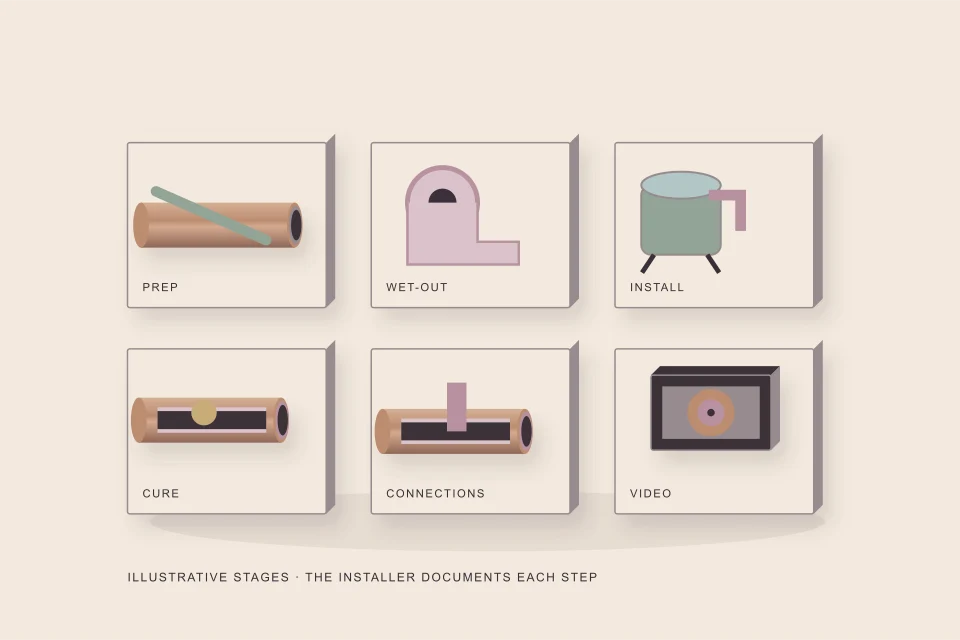
Relining a sewer runs in a fixed order. The line is inspected and measured on camera, flow is stopped or bypassed, the pipe is cleaned back to a sound wall and filmed again, the tube is wet out with resin, then inverted or pulled in and pressed against the wall, cured, cooled, trimmed, and every branch connection reopened. A final recorded video proves the result.
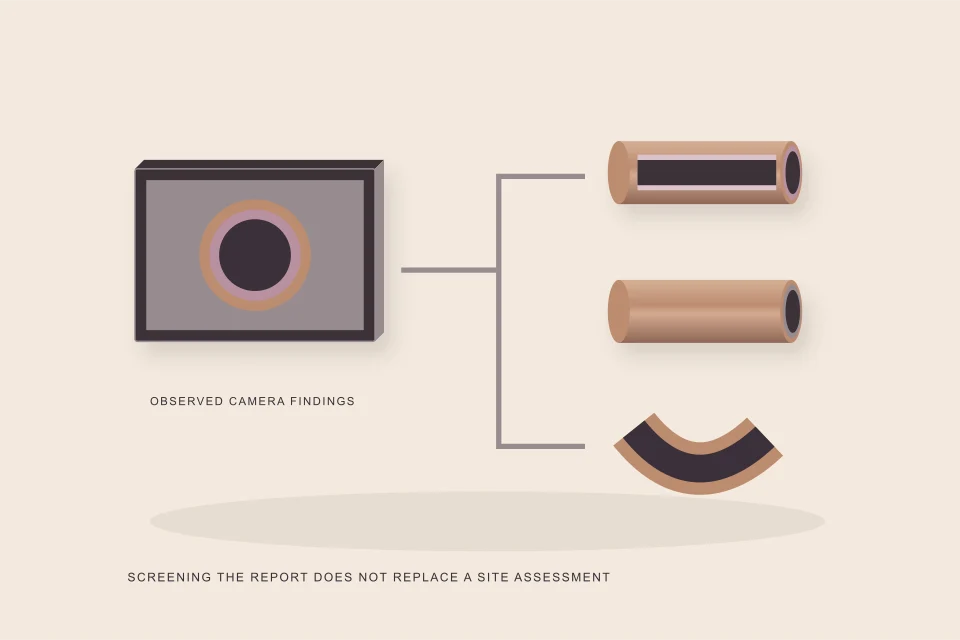
- The job is sized from a recorded camera run: length, diameter, bends, ovality and every connection by distance.
- Cleaning and the post-cleaning video decide whether the liner can seat tight to the wall.
- The tube is either inverted by water or air pressure, or pulled in and then inflated.
- After the cure the liner is cooled, the ends are trimmed and each branch is reopened with a remote cutter.
- For a house lateral, drains are out of use while the liner is installed and cured; fill traps and follow the installer’s instructions.
01 /What happens before lining day?
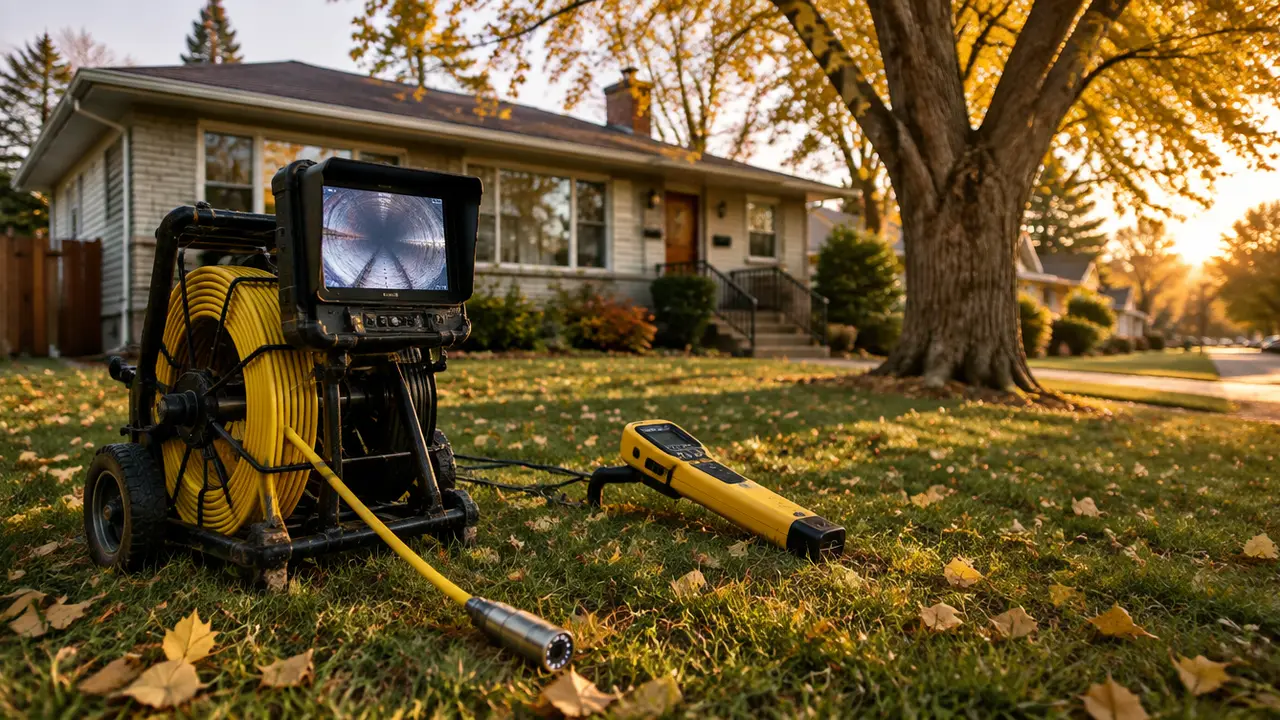
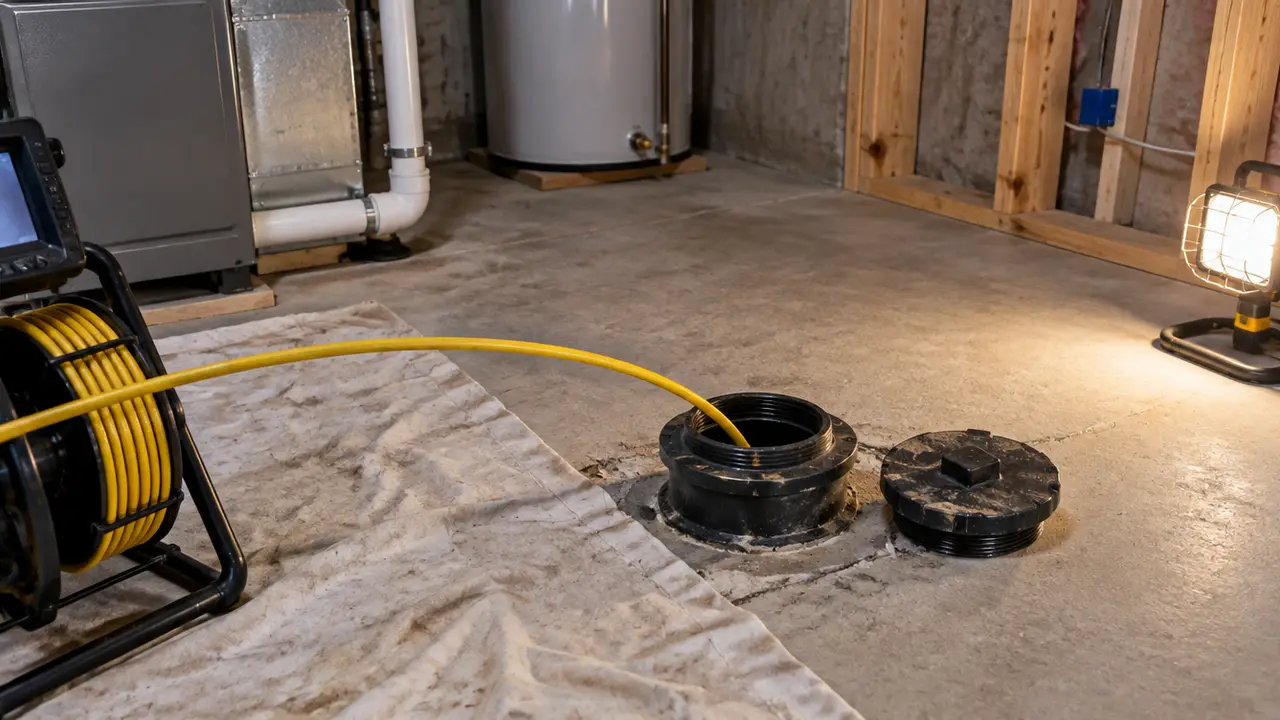
The work begins with a recorded camera inspection, because a liner is made to measure. The video sets the length between access points, the pipe diameter and any change in it, the material, the bends, the ovality at the worst point, and the distance to every branch connection. The Iowa SUDAS design manual stresses the last one: service connection locations should be identified and noted before lining so every one is reopened afterwards.
From that record the installer chooses a tube, a resin and a cure, and calculates the wall thickness for the host condition. For a house lateral the access is usually a cleanout in the basement or outside wall; if there is none, a cleanout or a small access pit comes first. Any digging brings utility locates and, depending on the municipality, a permit. Confirm permit needs with your municipality or ask the contractor to show them on the quote.
Anything a liner cannot pass is dealt with before lining. SUDAS lists protruding services, severely offset joints, collapsed pipe and root penetration as obstructions to be removed by remote repair or an open-cut point repair. The Can My Sewer Be Relined? screen applies those stop points to your own camera findings.
02 /How is the sewer cleaned and prepared?
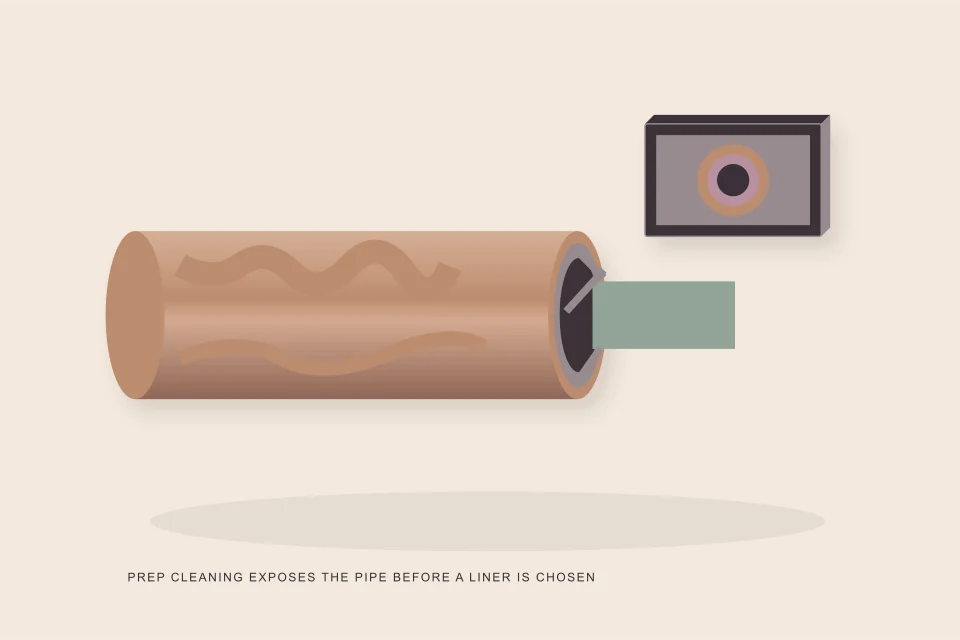
The pipe must be clean enough for the tube to press tight against sound wall along its whole length. Depending on what the camera found, that means high-pressure jetting to remove grease and sediment, mechanical cutters to take out roots at the joints, and descaling heads to cut tuberculation out of cast iron. Protruding pieces, such as a branch pipe poking into the bore, are ground flush.
- Control the flow
Nothing can run down the line while the tube goes in and cures. On a house lateral that means no water use; on a shared or municipal line, flow is plugged and pumped around the work.
- Clean
Jetting, root cutting and descaling, in as many passes as the pipe needs.
- Film again
A post-cleaning video shows the wall is clean, that nothing broke loose, and that no defect was hidden under debris.
- Confirm the measurements
Length and connection distances are checked against the design so the tube is cut to the right length.
The EPA fact sheet on trenchless rehabilitation lists bypass or diversion of flow as a requirement of the method, not an option. The cleaning methods themselves, and the limits of each on old pipe, are covered in cleaning and descaling before lining.
03 /How is the liner tube prepared?
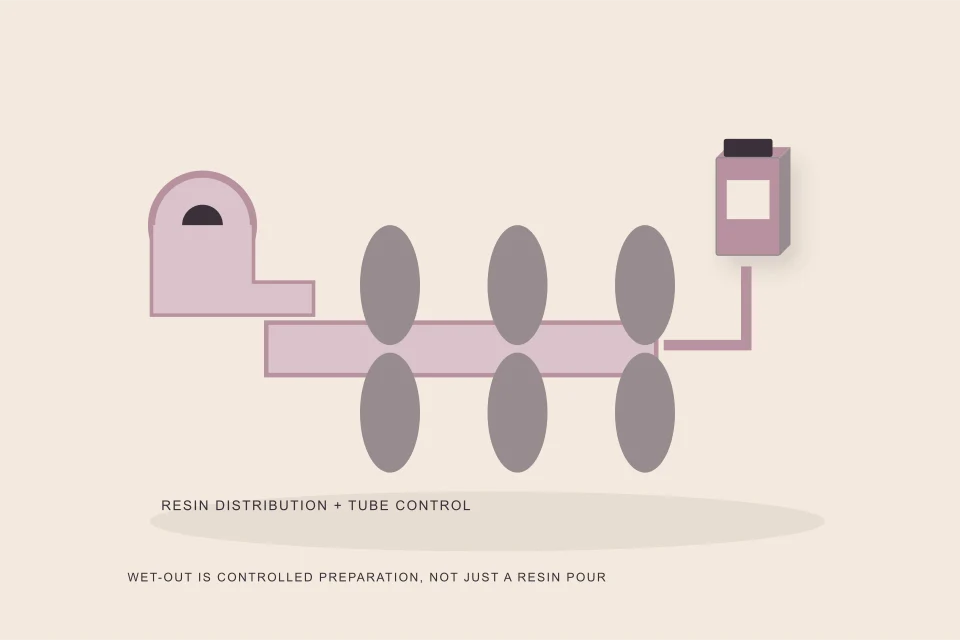
The dry tube is saturated with resin in a step called wet-out. A measured volume of mixed resin is drawn into the tube, usually under vacuum so that air is pulled out of the fabric, and the tube is passed between calibration rollers that spread the resin evenly. ASTM F1216, as summarised by SUDAS, calls for 5 to 10% more resin by volume than the tube holds, because some will be squeezed into joints and cracks during installation.
Heat-cured resin begins to react as soon as it is mixed, so a wet tube for hot water or steam curing is kept cool until it is installed; SUDAS notes it may be shipped in a refrigerated truck or packed in ice. Wet-out can be done in a plant or on site, and it is where dry spots and thin zones are either prevented or built in. The detail is in wet-out and calibration.
04 /How does the liner get into the pipe?
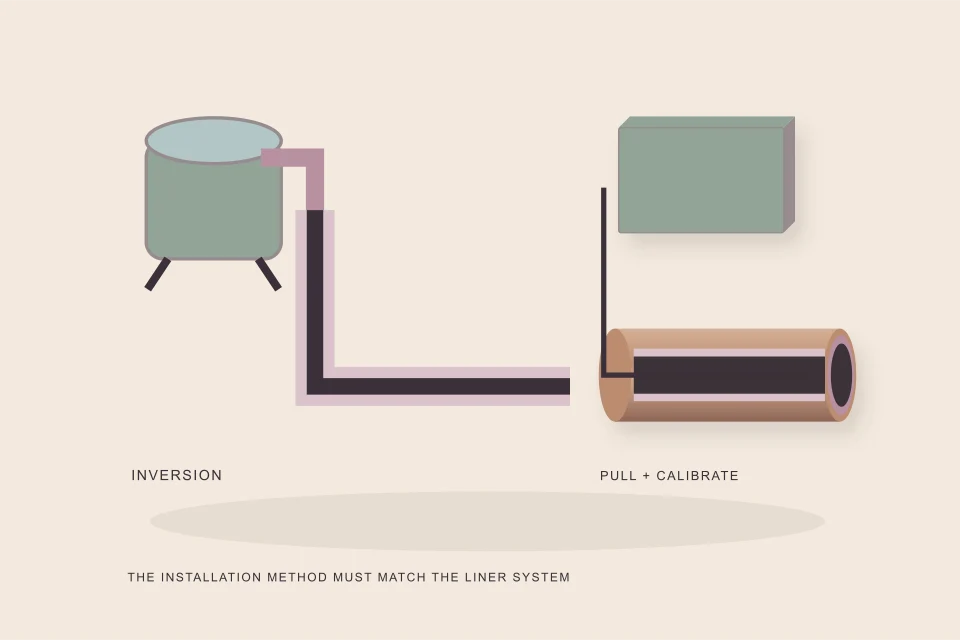
By one of two methods. In inversion, the method of ASTM F1216, one end of the tube is fixed at the access point and water or air pressure pushes it along the pipe, turning it inside out as it goes. The resin-soaked face ends up against the host wall and the coated face ends up inside. In pull-in-place, the method of ASTM F1743, the tube is winched through flat and then inflated, usually by inverting a calibration hose inside it.
SUDAS notes that inversion presses some resin into leaking joints and cracks, which is why it may suit lines with a lot of infiltration, while a pulled-in tube keeps its outer membrane on the outside. For structural defects, it describes both methods as working equally well. Air inversion from a small pressurised drum is common on house laterals, where the tube is launched from a cleanout. The comparison is in inversion vs pull-in-place.
05 /How is the liner cured and finished?
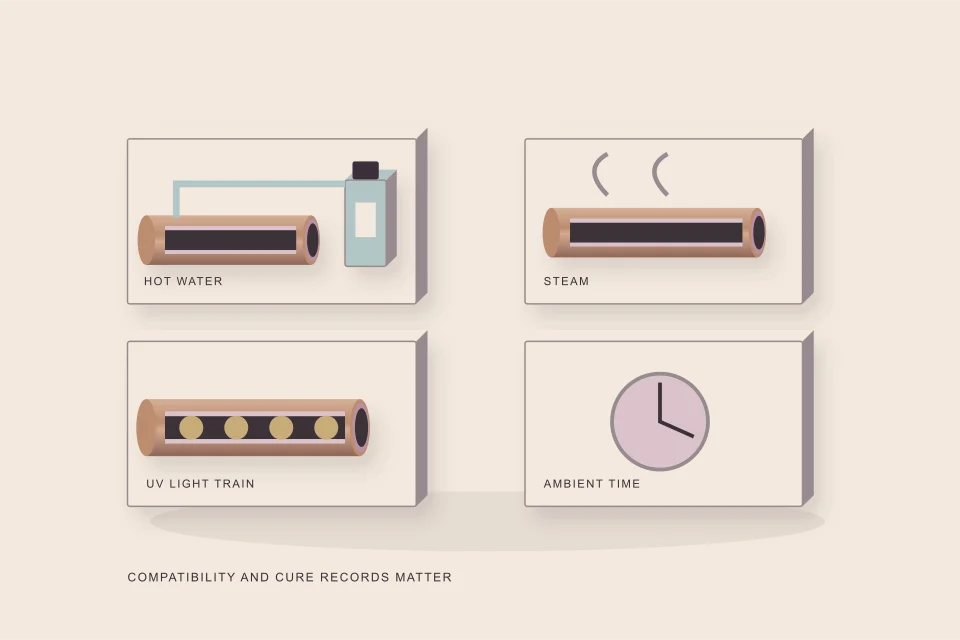
While pressure holds the tube against the wall, the resin is hardened. Heat-cured systems circulate hot water or introduce steam; ultraviolet systems draw a train of lamps slowly through a glass-fibre tube held open by air; ambient systems simply wait for the resin to set at ground temperature. The cure method follows from the resin, and each has its own record: temperatures and times for heat, lamp speed and power for UV. CIPP curing methods compares them.
After a heat cure the liner is cooled before pressure is released, because a warm liner is still soft and can move. The ends are then trimmed at the access points, and the liner is finished where it meets the old pipe so water cannot run behind it. SUDAS describes the result as a new pipe with a slightly smaller inside diameter but the same general shape as the original.
06 /How are branch connections reopened and checked?
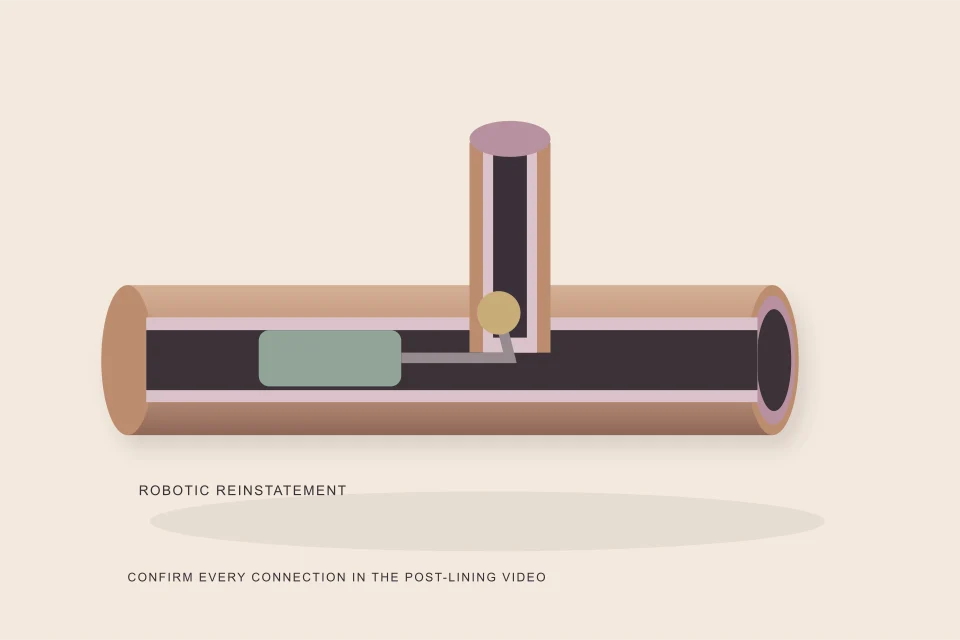
Once cured, the liner covers every opening along its length. SUDAS notes that a small dimple is normally left over each service connection, which helps locate it, and that the pre-lining distances confirm none is missed. In small pipe the openings are cut back out with a remote-controlled cutter; in large pipe a worker may do it by hand. A good cut matches the branch opening, with no lip left to catch solids and no gouge into the new liner.
Some installers then fit a connection seal, a short liner with a brim that bonds the branch to the lined pipe. The whole liner is filmed from end to end, with both ends and every reopened connection shown and distances marked. Keep that file with the house records. Cutting and sealing are explained in reinstating connections after lining, and what to look for on the final video in CIPP liner failures.
07 /What should the homeowner do on the day?
Most of the job happens out of sight, but a few things are yours to do. Municipal lining programs give a good model, because they have to brief every household on a street.
- Fill the traps. The City of Calgary asks residents to pour about four litres of water into every floor drain, laundry tub, bathtub and shower drain; the City of Toronto suggests one to two litres down every drain. A full trap keeps sewer air and resin odour out of the house.
- Stop water use for the window the installer gives you, including appliances on timers.
- Expect a smell. Styrene-based resins give off a plastic or glue odour during curing; both cities describe it as temporary. See CIPP lining smell and styrene.
- Ask for the files: pre-cleaning, post-cleaning and final video, the cure record and the liner details.
What a lining job costs is on the sewer relining cost page. If you have a quote and want it read against these stages, send it to the HAUSE Sewer desk.
FAQQuestions people ask
How long does relining a house sewer take?
For a typical lateral, much of the work fits into a working day, with drains out of use during the installation and cure. Heavy cleaning, a missing cleanout or a long cure can add time; the installer should give you the window in advance.
Why is the sewer filmed twice before lining?
The first run sizes the liner and finds the defects. The second, after cleaning, proves the wall is clean and that cleaning did not break anything.
What is the dimple in a new liner?
A slight depression where the liner spans a branch opening. It marks the connection for the cutter that reopens it.
Can the relining crew work from inside my basement?
Often, yes. A basement cleanout is a common launch point for a lateral liner, provided there is room for the equipment and the line qualifies.
NETWORKGo deeper across the HAUSE Sewer network
Jetting before trenchless lining: why the prep cleaning decides the result
Why jetting before trenchless lining matters: root removal, descaling cast iron, cleaning to a bare wall, camera checks and what rushed CIPP prep causes.
SewerQuotes.comSewer pipe lining cost: what a CIPP liner should cost in Canada
Sewer pipe lining cost in Canada (2026): CIPP liner ranges in CAD for full laterals and single sections, the line items, cost drivers and quality checks.
DrainAugering.caAuger cutting heads, and which one to use for each clog
Auger cutting heads explained: bulb, spade, C-cutter, grabber and root saw heads, what each clears, which risk damaging old pipe, and a head selection chart.