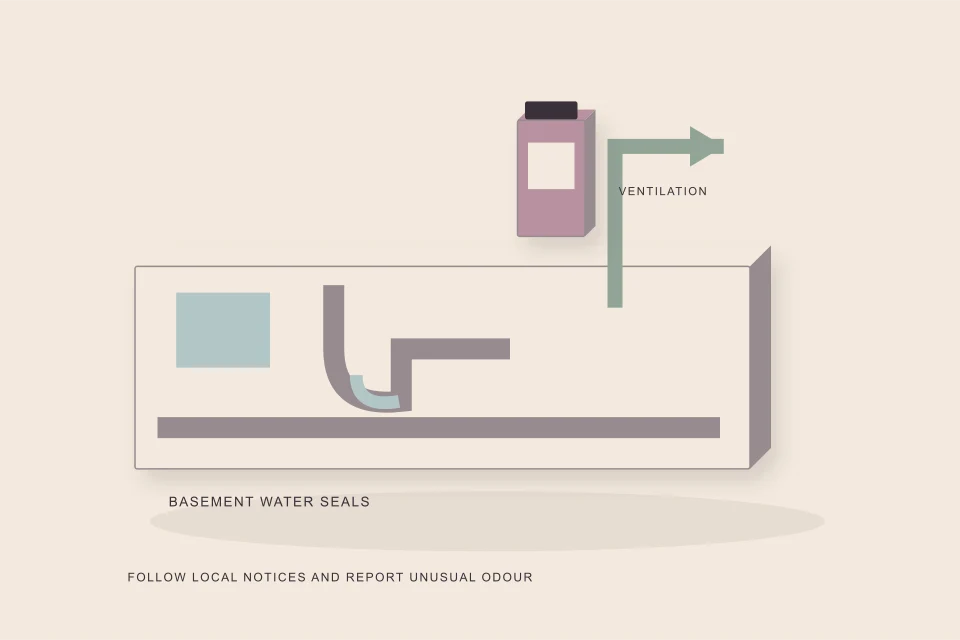
The plastic or glue smell during sewer relining usually comes from styrene in polyester and vinyl ester resins, released as the liner cures. The City of Toronto says styrene can be smelled at levels far below those linked to harm and typically breaks down within one to two days. Filling every drain trap with water before the work keeps most of it out of the house.
- Styrene is the reactive thinner in most polyester and vinyl ester lining resins, and it has a strong odour.
- Toronto advises closing windows and doors and pouring one to two litres of water down every drain before lining.
- Calgary’s lateral program asks for about four litres in each floor drain, laundry tub, tub and shower drain.
- NIOSH found worker exposures at CIPP sites are a mix of vapours, droplets and particles, and recommended controls and protective equipment.
- A rotten-egg smell is sewer gas, not styrene; it points to a dry trap or a plumbing problem.
01 /Why does sewer relining smell like plastic?
Because most lining resins are thinned with styrene, and styrene has a strong, sweet, plastic-like smell that people notice at very low concentrations. A 2025 study of CIPP resins in the journal Materials describes styrene’s double role in vinyl ester resin: it lowers the viscosity so the resin soaks into the tube, and it becomes part of the cured plastic. During curing, especially with heat, some of it is released into the air in the pipe and escapes at the access points and through any open path, including dry drain traps in nearby buildings.
The City of Toronto’s public health guidance puts it plainly: CIPP relining uses a resin containing styrene, which can produce strong, short-term odours, and when heated during curing it releases a distinctive odour often likened to glue or plastic. The City of Calgary tells residents on streets in its lateral lining program that they may smell plastic or glue coming into the home from the sewer lines, and that this is temporary.
02 /Is the smell from sewer lining dangerous?
For residents near typical work, Toronto’s guidance says the odour can be detected at very low concentrations, far below thresholds associated with harmful health effects, that its presence does not necessarily indicate a harmful level of exposure, and that under typical conditions CIPP relining is not expected to cause harmful health effects for people living or working nearby. It adds that some people may feel unwell because of strong odours, and that such symptoms usually go away quickly after the odour is gone. Styrene typically breaks down in the atmosphere within one to two days.
Workers are a different case, because they are close to the source for long periods. NIOSH has reported that emissions at CIPP sites are not styrene alone but a changing mixture of vapours, droplets, particles and partially cured resin, and has recommended that inhalation and skin exposures be minimised with engineering and administrative controls and protective equipment. Its 2019 evaluation of an ultraviolet-cure installer found styrene exposures that once exceeded the NIOSH short-term limit while grinding a cured pipe in an unventilated manhole, and it recommended ventilating manholes throughout the work.
03 /What do cities tell residents to do?
| Step | City of Toronto | City of Calgary lateral lining program |
|---|---|---|
| Fill drain traps | Pour 1 to 2 litres of water down every drain before the work | Pour about 4 litres into every floor drain, laundry tub, bathtub and shower drain |
| Water use during the work | Not stated on the styrene page | Do not use showers, baths, dishwashers or washers; keep flushing to a minimum |
| Windows and doors | Close them to keep outdoor odour out | Not stated |
| Notice | Contact 311 with CIPP questions | Residents are notified in person about 30 minutes before work begins |
| Health questions | Toronto Public Health, 416-338-7600 | Not stated |
| How long | Styrene usually breaks down within 1 to 2 days | Odour is temporary |
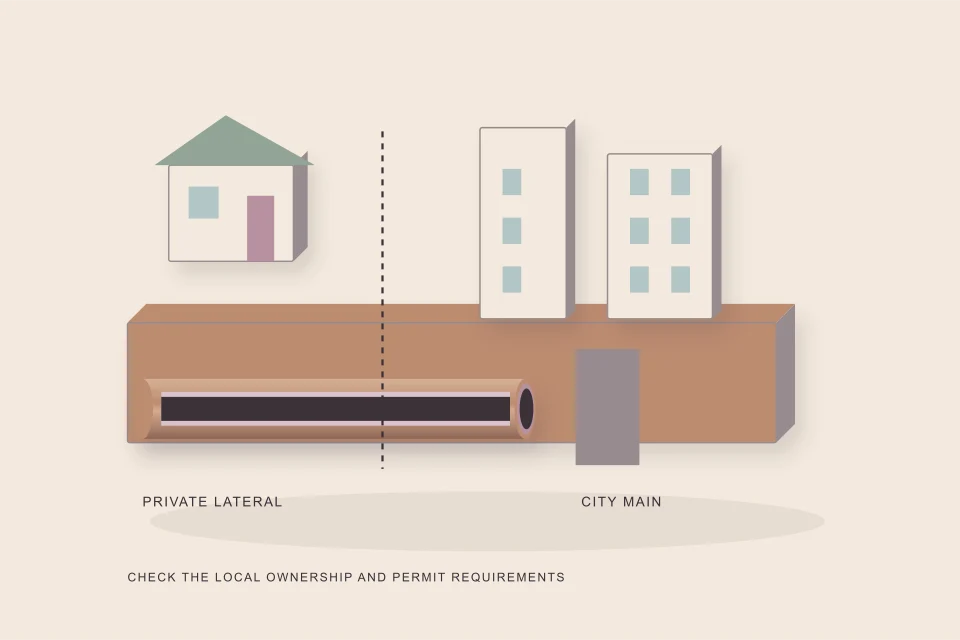
Other municipalities publish their own notices; follow the one for your street. If a private contractor is lining your own lateral, ask them for the same instructions in writing.
04 /Why does filling drain traps help?
Every fixture drain in a house has a trap, a bend that holds a small plug of water between the living space and the sewer. That water seal is what normally keeps sewer air out. Floor drains, basement showers and laundry tubs that are rarely used can dry out, leaving an open path from the sewer, where the resin is curing, straight into the basement. Pouring water in restores the seal.
This is also the first thing to check if a smell arrives or lingers: find the drain it is coming from and top it up. A floor drain that dries out often is worth priming regularly, lining or no lining.
05 /Is it styrene or sewer gas?
Hydrogen sulphide from sewage is toxic at high concentrations and deadens the sense of smell, which is why a fading rotten-egg smell is not always reassuring. Never enter a manhole, pit or confined space to look for the source; that is work for trained crews with gas monitors.
06 /Are there styrene-free lining options?
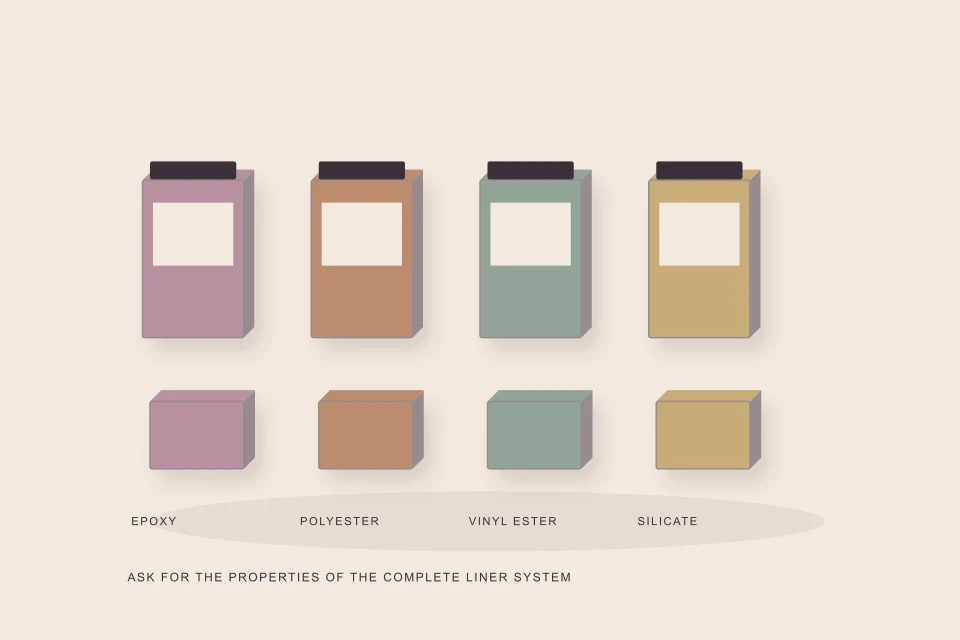
Yes, for some jobs. Epoxy resins cure by a different chemistry and are not thinned with styrene. Suppliers of silicate resin systems describe them as free of volatile organic compounds and completely styrene-free, mainly for connection repairs and short liners. Researchers and manufacturers are also developing styrene-free vinyl ester resins for CIPP; the 2025 Materials study examined one for UV curing.
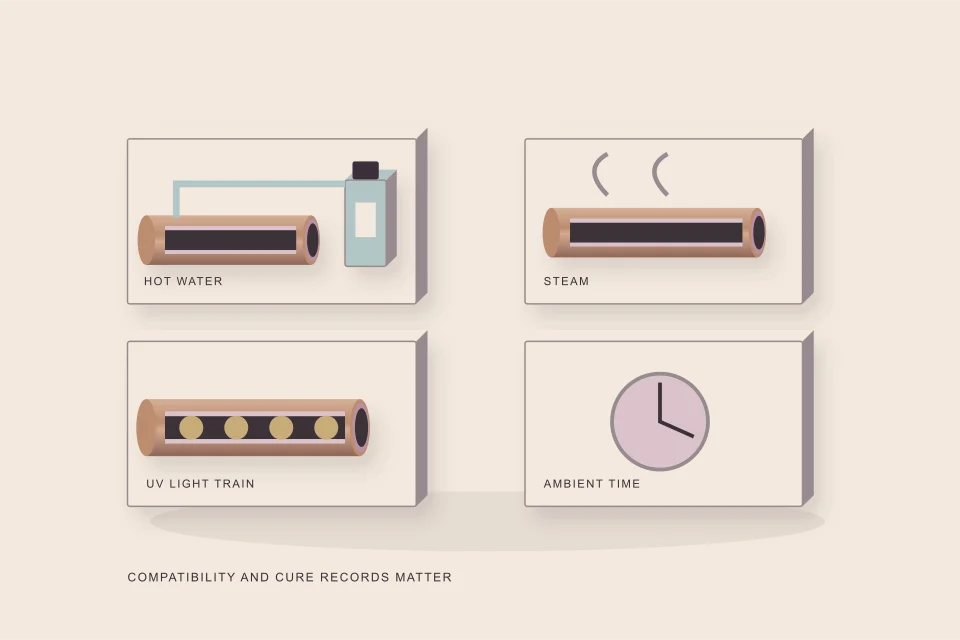
Ultraviolet curing is not automatically styrene-free: many UV systems use styrene-based polyester or vinyl ester, and NIOSH measured styrene during UV installations. If odour is a real concern, a school, clinic, restaurant or a household member with asthma, ask the installer directly whether the resin is styrene-based and what their odour-control plan is. The resin families are compared in CIPP resins and the cures in CIPP curing methods.
07 /What should businesses and sensitive buildings do?
Restaurants, clinics, schools, daycares and offices get the same odour as houses but with more people to consider and more drains that sit unused. The practical steps scale up rather than change. Walk the building before the work and fill every floor drain, trench drain, mop sink and seldom-used fixture trap. Ask the city or contractor for the timing so the cure does not coincide with the busiest hours, and whether the resin is styrene-based. Brief staff that a plastic or glue smell may come and go and should fade within a day or two, and name who to call if it is strong. Where people with respiratory conditions are present, plan for fresh air, and raise any symptoms with the local public health unit, as Toronto’s guidance suggests for residents.
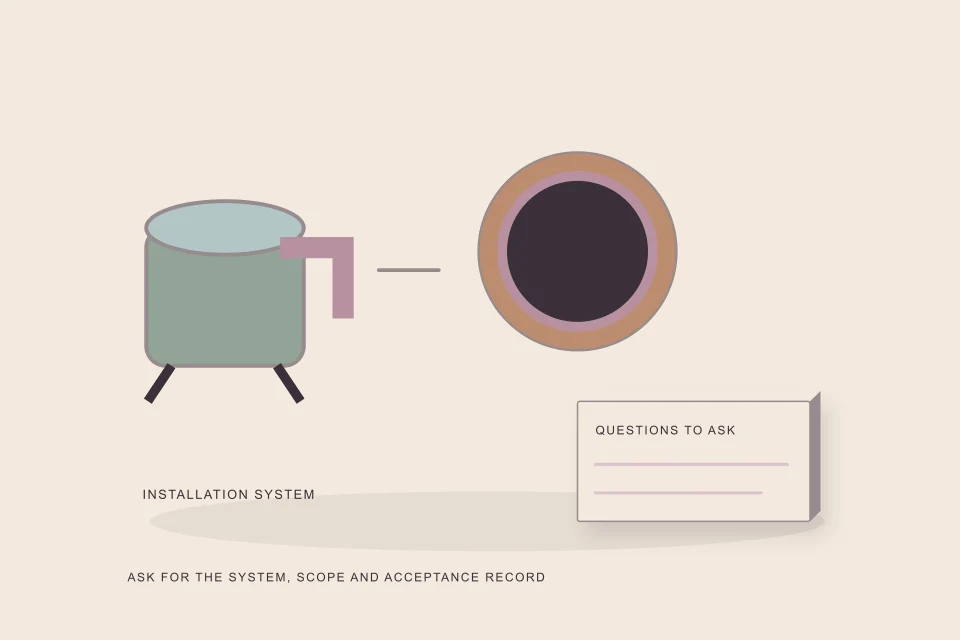
08 /What should I ask before lining near my home?
- Is the resin styrene-based?
- When will the cure happen, and for how long should drains stay unused?
- How much water should go into each trap, and which drains?
- Where will exhaust or condensate vent during the cure?
- Who do I call if the smell is strong or lingers?
The full job sequence is in how sewer relining works. How Canadian cities run lining programs is on the Across Canada page. If you are planning your own lateral and want the odour question covered in the quote, send it to the HAUSE Sewer desk.
FAQQuestions people ask
Can styrene from sewer lining get into drinking water?
Sewer lining works on the wastewater side, which is separate from the drinking water supply. Lining of potable water pipes is a different product with its own approvals; ask the utility if a water main is being lined.
How long does the smell from sewer relining last?
Usually a day or two. Toronto notes that styrene typically breaks down in the atmosphere within one to two days, and Calgary describes the odour as temporary.
Why does my house smell of glue after the street sewer was lined?
Styrene from the curing resin can come up through dry drain traps. Pour water into every drain, especially floor drains, and ventilate.
How much water should I pour down my drains before sewer lining?
Toronto suggests 1 to 2 litres down every drain; Calgary’s lateral program asks for about 4 litres in each floor drain, laundry tub, bathtub and shower drain.
Is epoxy pipe lining odourless?
Epoxy is not styrene-based, so it avoids the typical styrene smell, but any curing resin can have some odour. Ask the installer about the specific product.
Should I leave home during sewer relining?
Usually not. Fill traps, close windows, and get fresh air if the odour is strong. Follow any instruction from the city or contractor.
NETWORKGo deeper across the HAUSE Sewer network
Is sewer backup dangerous? Health risks, what it smells like and what it looks like
Is sewer backup dangerous? How sewage can make you sick, what sewer backup smells and looks like, when the smell is harmful, and who should stay away.
PipeCleaning.caWashing machine drain pipe: where it is, what size it is and how to clean it
Washing machine drain pipe guide: where the standpipe or laundry tub drain is, what size it should be, why it overflows, and how to clean out lint and scum.
SewerQuotes.comSewer pipe lining cost: what a CIPP liner should cost in Canada
Sewer pipe lining cost in Canada (2026): CIPP liner ranges in CAD for full laterals and single sections, the line items, cost drivers and quality checks.
SOURCESSources and further reading
- City of Toronto — Styrene Used in Sewer Relining
- City of Calgary — Sanitary Lateral Lining Program
- NIOSH — CIPP inhalation and dermal exposure risks (2017)
- NIOSH — Evaluation of Exposures to Styrene During Ultraviolet Cured-in-place Pipe Installation (2019)
- Materials (2025) — Styrene-free vinyl ester resin for CIPP