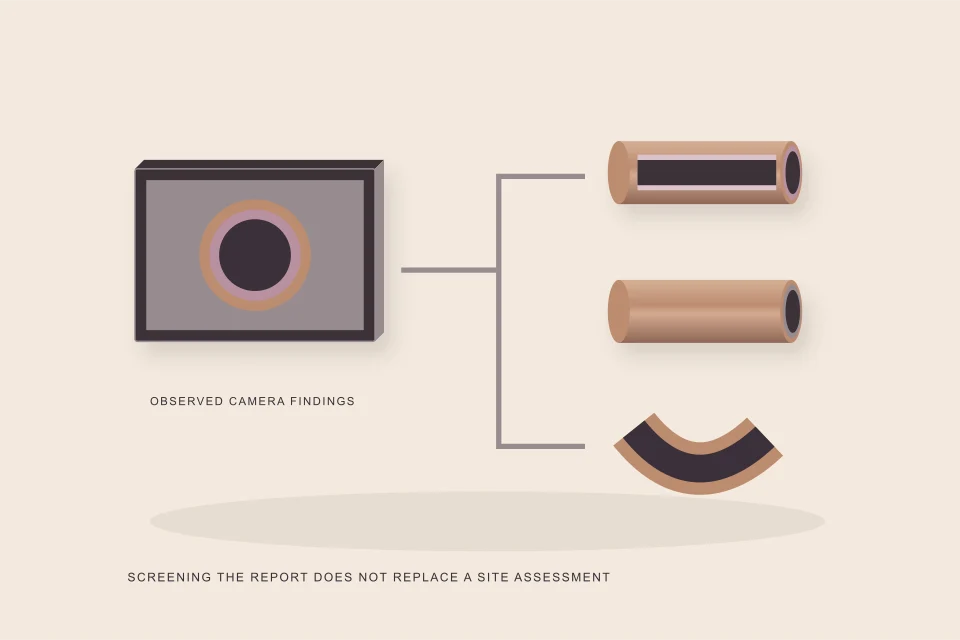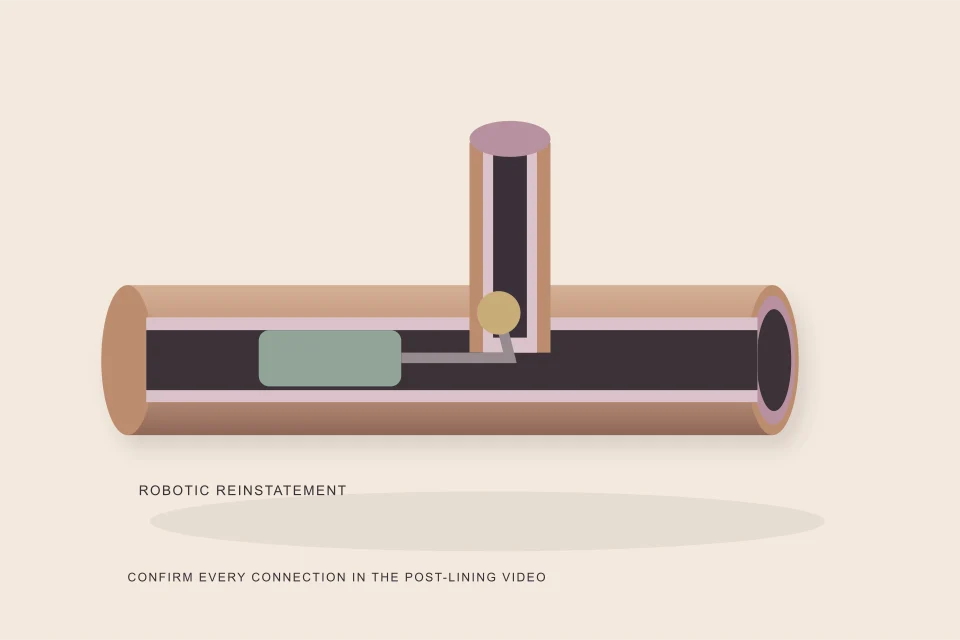
A cured liner covers every branch opening along its length. Each one is located from the pre-lining distances and the dimple the liner leaves over it, then cut back out from inside with a remote-controlled cutter, or by hand in pipe large enough to enter. A good reinstatement matches the branch opening, with no lip and no gouge, and a connection seal can then close the junction.
- Every connection is recorded by distance before lining, so none is lined over and forgotten.
- The liner usually leaves a small dimple over each opening, which guides the cutter.
- An under-cut leaves a lip that catches solids; an over-cut damages the liner and exposes the host pipe.
- Brushing or finishing smooths the cut edge after the opening is made.
- A connection seal, or a one-piece main-and-lateral liner, closes the gap where branch and liner meet.
01 /Why do connections need reinstating after lining?
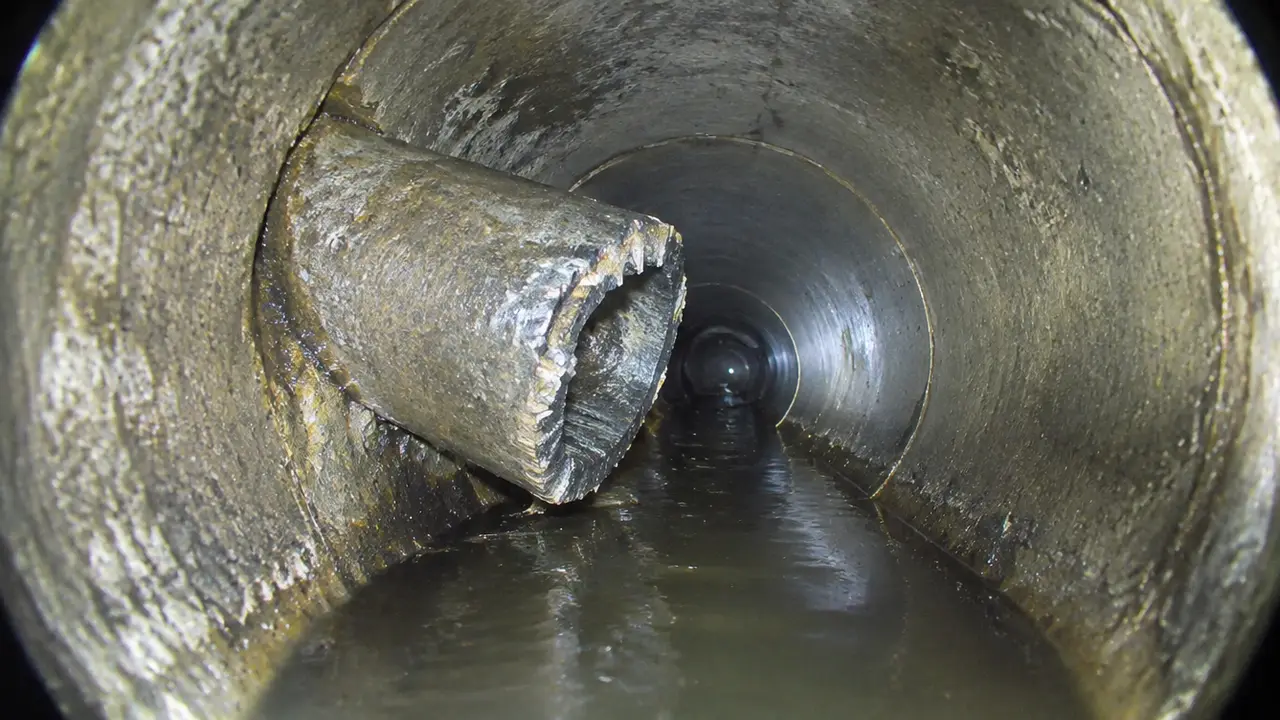
Because a liner is a continuous tube. When it is inverted or inflated inside the host pipe it spans every opening along the way, a branch from a toilet or a floor drain on a building drain, or house laterals on a municipal main, and when it cures those openings are sealed shut. Until they are reopened, anything draining through them has nowhere to go but back up.
The Iowa SUDAS manual describes the finish of every CIPP job the same way: the ends are trimmed off and the service laterals reopened, robotically in smaller pipe or by a worker in larger diameters. It adds that the number and locations of the connections should be noted during the pre-lining inspection so all are reopened, including those that are hard to identify. Missing one is not a cosmetic defect; it blocks a drain.
02 /How is a connection found under a new liner?
From three pieces of evidence. The first is the pre-lining video, which records the distance from the launch point to each connection and its position around the pipe, such as the one o’clock position. The second is the liner itself: SUDAS notes that a small dimple is normally left in the liner directly over each connection, where the tube bridged the opening under pressure. The third, on some jobs, is a signal from the branch side, such as water or a small light, visible through a translucent liner.
Distance matters because tubes stretch and footage counters are not perfect. An operator who finds the dimple at 6.3 m when the record said 6.1 m will confirm it before cutting. On a house lateral with one or two branches, the cutter may enter from the cleanout; on a main, the cutter travels from a manhole to each house connection in turn.
03 /What tools reopen a lined connection?
| Tool | How it works | Typical use |
|---|---|---|
| Robotic cutter | A camera-guided head with a rotating bit, positioned remotely, grinds through the liner at the connection | Mains and larger laterals |
| Lateral cutter on a flexible shaft | A smaller cutting head driven through a cleanout on a cable or shaft | Branches on house laterals and building drains |
| Brush or finishing head | Smooths the cut edge and removes flashing after the opening is made | After the main cut on any size |
| Manual cutting | A worker cuts the opening from inside | Pipe large enough to enter safely |
The US EPA fact sheet puts it in one line: laterals are typically reinstated with robotic cutting devices, or, for large-diameter pipes, by manually cutting the liner. For homeowners, the relevant question is less which machine and more whether the operator can show, on video, that each opening now matches the branch.
04 /What does a good reinstatement cut look like?
A good cut reopens the full branch opening and nothing more. The edge follows the branch wall, the liner is cut flush with it, and the edge is brushed or finished so there is no ragged flap. Seen on video from inside the lined pipe, the opening is round, clean and the same size as the branch.
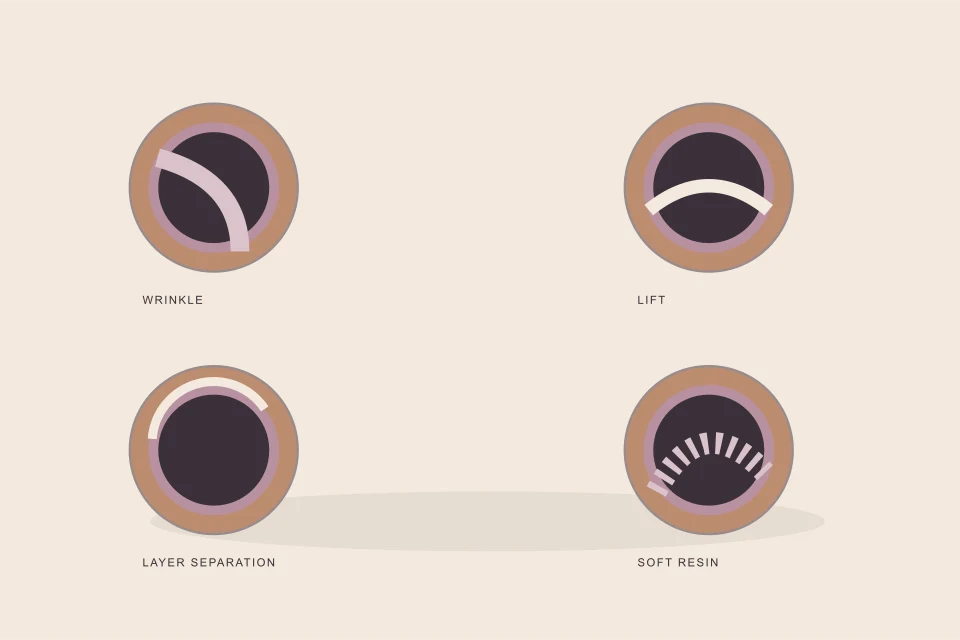
Neither is rare, and both can be fixed, but they must be seen first. Ask for the final video to include a close look at every reinstated connection, and compare the count with the pre-lining record. The wider list of liner defects, and how each shows on camera, is in CIPP liner failures.
05 /What is a connection seal?
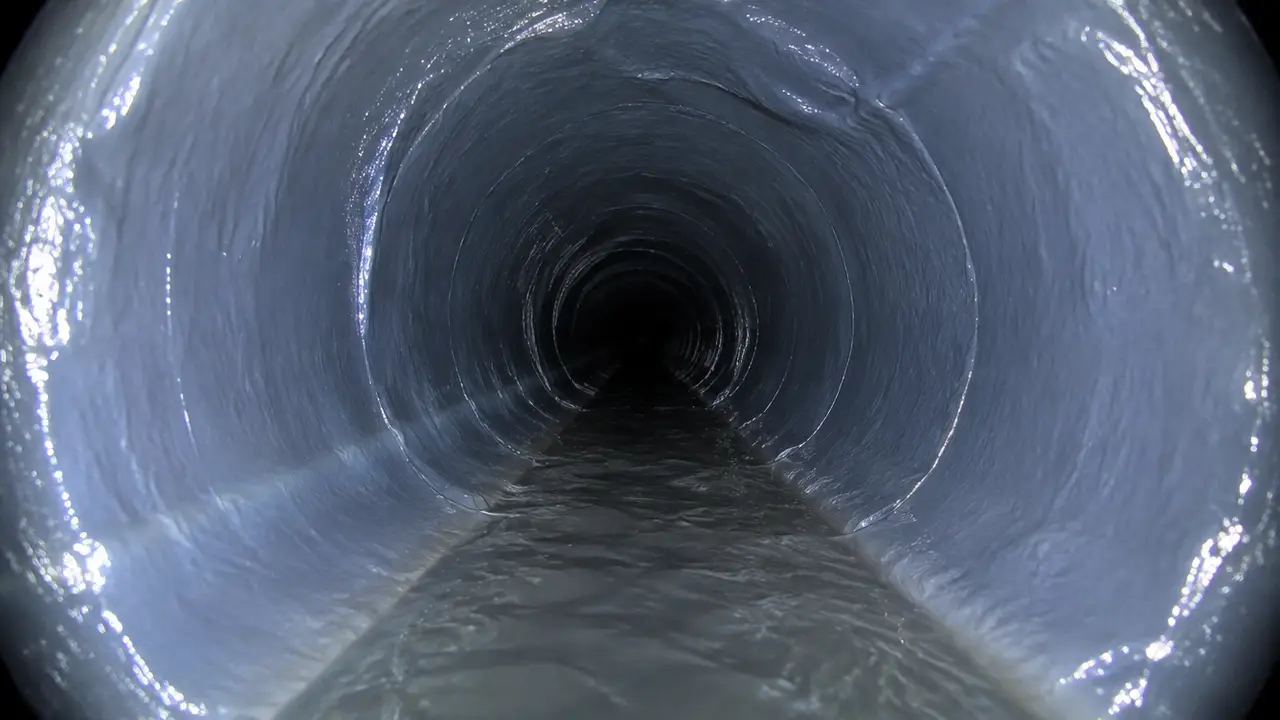
Even a perfect cut leaves a junction: the branch pipe, still the old material, meets the new liner at the edge of the opening. Water from the soil can run along the outside of the branch and into the gap behind the liner, and roots can follow it. A connection seal closes that junction. The usual form is a short cured-in-place liner with a brim, sometimes called a top hat, pressed into the branch so its brim laps onto the lined pipe and bonds there.
A more complete approach renews the connection and the lateral together. ASTM F2561 describes a one-piece main-and-lateral liner, inverted from the main, that lines the lateral and forms what the standard calls a verifiable non-leaking connection at the main, for laterals of 3 to 12 inches and mains of 6 to 24 inches. Suppliers also offer silicate and other resin systems specifically for connection repairs; see CIPP resins.
06 /How are the liner ends finished?
The two ends of a liner are its other openings. Where the liner stops, at a cleanout, an access pit or the property line, the cured tube is trimmed and the transition to the old pipe is sealed so water cannot run into the annulus. The method depends on the system: hydrophilic seals that swell in water, end sleeves, or resin-rich terminations are all used. Ask which one is used on your job and where exactly each end sits.
An unsealed end lets groundwater or sewage track behind the liner, where it can push the liner inward as a lift or carry fine soil away. On a lateral lined from the house to the property line, the downstream end often meets a city-owned section; if the city has lined its side, as some Canadian programs have, the two liners meet close together. Local detail is on the Across Canada page.
07 /Are connections on a house lateral different from a main?
Mostly in scale and access. On a municipal main, the connections are house laterals arriving from the side, and the cutter works from a manhole with room for a robotic head. On a house lateral or building drain, the connections are smaller branches, a basement floor drain, a laundry line or a second stack, and the cutter often travels in from a cleanout on a flexible shaft through a 100 mm or smaller pipe. The same quality rules apply: full opening, flush edge, no gouge.
Small branches bring their own risks. A branch that joins at a sharp angle is harder to find and cut cleanly. A branch that is itself failing, such as an old clay floor drain line, may be reopened perfectly and still leak where it meets the liner, which is where a connection seal or a separate repair of the branch comes in. Ask before lining which branches will be reopened and whether any of them need their own attention.
08 /What should I check after reinstatement?
- The number of reopened connections matches the pre-lining record.
- Each opening is full size, with no lip and no cut into the liner around it.
- Edges are brushed smooth, with no flaps.
- Any connection seals are fully bonded, with no gap at the brim.
- Both liner ends are finished and sealed, and their distances recorded.
- Every fixture drains normally when water use resumes.
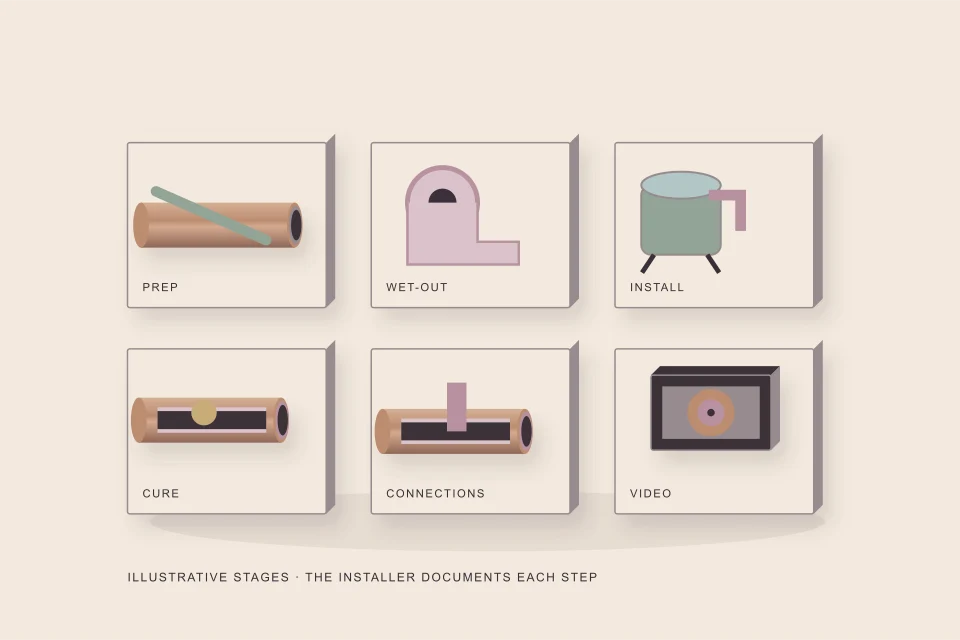
Keep the final video. It is the baseline any future camera run will be compared with. The earlier stages are covered in how sewer relining works, and repair-scale reinstatement decisions, such as whether a sectional liner is enough, on sister site TrenchlessSewerRepair.ca. To have your final video or a quote reviewed, send it to the HAUSE Sewer desk.
FAQQuestions people ask
What is a reinstatement cutter?
A remote-controlled cutting head, guided by a camera, that grinds a branch opening back out of a cured liner from inside the pipe.
What happens if a connection is missed after lining?
The branch stays sealed and its drains back up. The pre-lining connection count and the final video are how a missed one is caught.
What is a top hat connection seal?
A short cured-in-place liner with a brim, pressed into a branch so the brim bonds onto the lined pipe and seals the junction.
Can an over-cut liner be repaired?
Usually, with a connection seal or a short patch over the damaged area. It should be found on the final video and fixed before the job is closed.
NETWORKGo deeper across the HAUSE Sewer network
Can a drain snake damage your pipes? Where the real risks are
Can a drain snake damage pipes? How cables and cutters harm old clay, Orangeburg, cast iron, plastic traps, chrome fittings and toilets, and how to avoid it.
SewerRoots.caPlanting Distance Checker
Planting Distance Checker: pick a tree, shrub or perennial group, enter its distance from the sewer lateral, and see if the spot meets the guideline.
SewerQuotes.comSewer pipe lining cost: what a CIPP liner should cost in Canada
Sewer pipe lining cost in Canada (2026): CIPP liner ranges in CAD for full laterals and single sections, the line items, cost drivers and quality checks.